by Mike Brunel | Jun 1, 2021 | Strategy

Preparing for the Journey.
In my blog last week I talked about how the journey began in my own company NRS Media.
This week I want to discuss the importance of planning the journey in sales and explain the process
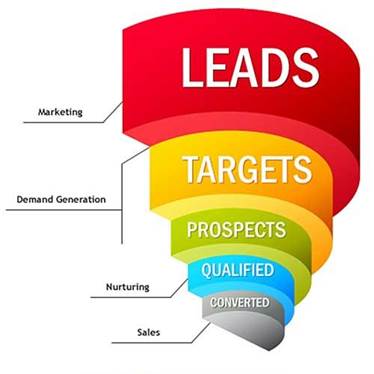
Part of the reason people panic is that selling seems like a mysterious process. We can solve that mystery. Selling is like any other journey: the territory you are covering may be new to you, but it has been travelled before, and there are certain steps you can take to clear the way. Each step you take along the way matters.
Let’s look more closely at the selling journey.
Building Up
Selling a product or service is, in many ways, like a building project. I have been involved in two major renovations for both a home and a commercial building.
Here’s how the process unfolds:
- You speak with an architect who presents you with some plans, drawings, or visual examples of what your home or building might look like.
- Once you approve your plan, you seek a builder to do the construction.
- If you want to approach the build with confidence, you’ll also want to be involved in the builder’s plans and timelines. Using excellent project management tools is key.
- Still, even the best-laid plans sometimes change. You might go back and forth and change a few parts of the plan.
- Even when you get started, you need to keep in mind the need to be flexible, adjust to shifting timelines, accommodate last-minute decisions, and possibly suffer some setbacks.
- You need to be nimble, but it’s hard, because there is a lot at stake, financially and emotionally.
- Soon enough, though you start to visualise the final product and then watch your home or building take shape. Finally, you see your completed project in front of your eyes. All of that planning has paid off.
Following a plan and actually building that home requires discipline and principles.
It’s the same with sales, which unfolds in similar stages.
With both types of projects, it is important, to begin with, the right mindset, so why don’t we do that when it comes to constructing a sale? Why don’t we plan the process that will let us get a result we want?
Jump in too Early
Most business owners jump in too quickly, assuming that their product is so magnificent that people should just buy it. Or, they don’t bother to plan.
Usually, salespeople do not follow any particular steps or process on the way to the sale of that product. If you look at sales the way you look at building your home, though, you will see that there are certain processes you have to follow to get a good result.
It does not have to be a complicated process, but you do need a plan.
Knowing a few simple steps in the journey to your sales is all that is required.
If you don’t know where you are going, how will you know when you get there?
Next week I will have a few tips to share. See ya then.
Have a great week selling your stuff!
Mike
PS. Why not try a 7-day sales journey to build your very own sales plan.

by Mike Brunel | May 18, 2021 | Strategy, Uncategorized

When I came into media, my main challenge was to sell something invisible. I learned that people buy ideas more than things. They buy concepts, promotions, and methods for getting people into their stores.
In the early 90s, the media industry in New Zealand was entering deregulation. The government had decided to “open up the airwaves” and issue new opportunities for starting radio/media companies. Doug Gold the original owner of More FM (now Mediaworks) recognized an opening when he saw one. He obtained several licenses to operate new radio stations in cities and towns all over the country.
Culture First- The Rest Follows.
Doug had created an amazing culture and fun way of doing business at media companies he had previously managed. Once word got around that he was starting a new venture, former staff flocked to be on the journey with him. Some would not be receiving any incomes for several months, but they trusted him and believed that his latest project was going to be special.
The challenge for the new media enterprise was that they would be working in one of the most competitive categories in the world. Media bleeds money like a wounded bull and it is riddled with failures, obnoxious personalities, and owners with huge egos.
Doug’s personality, on the other hand, was just the opposite. He had courage, belief, and an unbending single-mindedness; the usual hurdles would not present a problem for him.
Starting off on an unusual note, Doug launched his new company with a product called The Gold Key program. When Doug had researched the best way to enter the advertising market, he had sought advice from hundreds of clients.
Needs Matter
He asked questions about everything. He asked what they wanted in their advertising, examined the paths they took in sales and marketing and observed their needs.
He knew it would be a lot easier—and less daunting—to ask for someone’s business if he already knew what that prospective customer needed. He was involved in every aspect of the business, down to the formatting of his own stations’ programmes.
One of the insights Doug gained from his research was that his advertising clients were sick of just buying “spots and dots.” They wanted to belong to a group, a modern-day tribe of sorts.
Doug also discovered that clients needed to advertise and promote themselves on a continual basis. Constant exposure paid off and made advertising more affordable to small-to-medium companies. Many big companies already supported their products and services this way, and it worked well.
They were the big guys, though; they could afford it; with their resources, they could simply outshout anyone else’s marketing. Now even the little guy could compete.
When it has gone it’s gone.
Most media companies generate their income through advertising. It’s their inventory, just like all the stock in a retail store. The only difference is if that “inventory” is not sold that minute, hour, or day, then the opportunity at that moment is gone forever. Once the advertisement that was due to be sold at midday is NOT sold, it’s gone. The use-by date has expired.
The American Express of Media
Doug understood his clients and the market, so he created a membership program. Way before XERO and Apple introduced their subscription services.
He asked his clients to commit to him for twelve months. Each advertiser would receive a monthly allocation of commercials; in return, they received benefits like travel deals, access to unsold airtime, and upgrades to better commercial times. While perks like this are common today, they were a novelty in media back then.
Selling this way works best in a seminar situation, in what is often referred to as “one-to-many” selling. Every client who attended Doug’s seminar received valuable information on how to advertise and promote their business.
Any advertiser who agreed to a membership also earned a free chance at winning a brand new BMW. This was unheard of at the time. It was mind-blowing, really, and took the market by storm.
In year one, Doug and his amazing team sold $1.2 million in revenue before they even opened the media company and before one song was played. In today’s dollars that would be around $4.6 million. What sold it?
Creating a Selling System.
The key was a combination of belief, systems, a great team, and innovation. Doug generated hundreds of memberships and improved his already stellar reputation.
Over several years, Doug’s product became known as the Image Plus program. With my other founding partner, Brian Duffy, driving the helm, and me writing all the sales manuals and implementing the training programmes, we then took on the world.
These days, that one product is part of a suite that my old company NRS Media sells in over 400 media companies in twenty-three countries, in eleven languages. In the past ten years alone, the Image Plus program has generated over $300 million annually in revenue for its clients.
The start of something special. These days you would have called it a start up. The only difference that over the next 20 years, NRS Media never borrowed a cent, zip, zero. All self-funding.
An idea tested refined, then proved.
Why did it sell? The market was ready for it.The media companies advertisers wanted to buy it, and in the end, there were 40,000 of them that bought it every year for 15 years.
In my next blog, I will unveil the secret to creating the system that built that one product, which went on to dominate direct selling in media across the globe.
Until then.
Mike
PS. Dreaming of increasing your sales? Down load my FREE 7- Day Challenge Now!

by Mike Brunel | May 4, 2021 | Sales, Strategy, Uncategorized
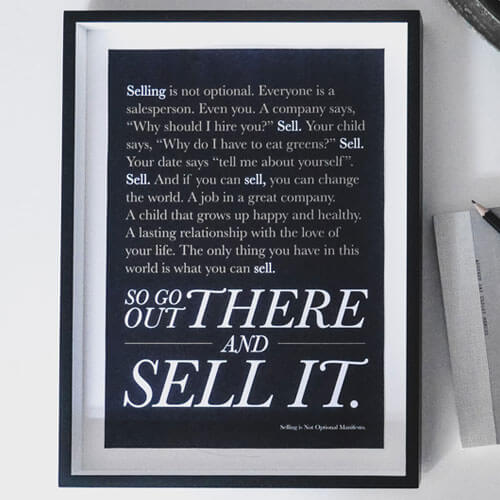
I am always being asked what makes good sales training and coaching? Here are five tips I hope can help you make the right decision when it comes to hiring any sales trainer or sales coach.
1.The sales team don’t see the sales training as relevant to them.
Usually what happens is that a sales person will be sent on a sales training course and they get there and it’s straight out of a manual. Taught to them by rote and disappointing.
2. The ‘one size fits all’ approach doesn’t suit their business situation.
The trainer has not spent the time to evaluate the sales persons needs. Tailor making specific programmes work better. Before any training ask the sales trainer to work with you on YOUR outcomes for the training programme.
3. Lack of Outcomes once at the course.
This is similar to point two, sales people have different needs, just like their clients, many times sales people arrive at course and at are never asked what their specific outcomes today for this course.
4. Sales trainer, not a sales person.
In this case, it’s more about creditability, if the trainer has no experience selling in any form, it’s difficult to build rapport with the audience you are training. The theory is fine, but not realistic. Sales experience is must for a trainer.
5. Learning as you go.
If the training is not carried out in an environment of learning and facilitation it’s seen as boring and lacking in depth. In the ever increasing world of soft skills training involving your participants in ‘learning by doing’ is a must.
These tips have certainly helped my clients and may help you.
Good selling
ABOUT THE AUTHOR:
Mike Brunel – Author, Sales Trainer and Coach at Mikebrunel.com. Mike started mikebrunel.com after being a successful entrepreneur. He was a co-founder of NRS Media a global leader in media sales. His products and services generated $350 million a year in revenue for his clients. He sold that business in 2014 and now consults to business owners throughout New Zealand and beyond. He works with any business that wants to increase sales that have a sales turnover of 1/2 million up to $10 million. He works closely with digital and marketing services to help attract sales for his clients.

by Mike Brunel | Apr 8, 2021 | Sales, Strategy
80%……….Of all sales are made after the fifth call
48%……….Of all sales people call once and quit
25%……….Call twice and quit
10%……….Keep on calling
These statistics is pretty close to the mark in all forms of selling be it a service or product sell.
I think that we all know…
SALES DON’T JUST HAPPEN.
I have created a diagram to illustrate the real time that your buyer is actually available to sell to.
Just email me at mikebrunel.com for a copy.
Why do many some sales people thrive when others do not, here are some ongoing practices I observe every day.
1. Always add to your pipeline.
Not continuously adding to your pipeline is often a mistake that salespeople make once they have established a strong ongoing sales funnel. If you continue to add to your sales pipeline then if that long established client decides that this month they will not buy, then it does not matter because you have more potential opportunities in your pipeline.
If you are always taking the position of helping and assisting your client then your pipeline will increase. If you are only filling up your pipeline when you are desperate then many clients will sense that and you will come across as desperate.
2. Never assume they need you.
I have noticed that many salespeople leave a message with a client or a voicemail and they think it ends there. They think that they have done what they had to do and then move on. Depending on the relationship you have with that client they may or may not call you back. If you do want to do business with them then you have to plan that call and decide the ongoing strategy to get the person to respond. Create a proactive message for them to call you back.
3. Sales potty training.
For those that may have had young children there was a time when you had to train them to go to the toilet. In my experience (a while ago) I always used to say “Pee or get off the pot”. In other words, make a decision.
There will be times when you have to make a decision to get off the pot. Some clients need to be let go. You need to figure out if a prospect is serious about working with you or not. A good pipeline is full of qualified prospects and not “tyre kickers”

All pipeline activities have to support your key messages and understanding actually who your client is and where they play is vital to successful sales.
Good selling
Mike

by Mike Brunel | Mar 31, 2021 | Sales, Strategy
Part of the reason people panic when they think about sales is that selling seems like a mysterious process.
We might just be able solve that mystery.
It’s our belief that selling is like any other journey: the territory you are covering may be new to you, but it has been travelled before, and there are certain steps you can take to clear the way. Each step you take along the way matters.
Let’s look more closely at the selling journey.
Building Up by Planning
Selling a product or service is, in many ways, like a building project.
I have been involved in two major renovations for both a home and a commercial building.
Here’s how the process unfolds:
- You speak with an architect who presents you with some plans, drawings, or visual examples of what your home or building might look like.
- Once you approve your plan, you seek a builder to do the construction.
- If you want to approach the build with confidence, you’ll also want to be involved in the builder’s plans and timelines. Using excellent project management tools is key.
- Still, even the best-laid plans sometimes change. You might go back and forth and change a few parts of the
- Even when you get started, you need to keep in mind the need to be flexible, adjust to shifting timelines, accommodate last-minute decisions, and possibly suffer some setbacks.
- You need to be nimble, but it’s hard, because there is a lot at stake, financially and emotionally.
- Soon enough, though you start to visualise the final product and then watch your home or building take shape. Finally, you see your completed project in front of your eyes. All of that planning has paid off.
Following a plan and actually building that home requires discipline and principles.
It’s the same with sales, which unfolds in similar stages.
With both types of projects, it is important to begin with the right mindset, so why don’t we do that when it comes to constructing a sale? Why don’t we plan the process that will let us get a result we want?
Most business owners jump in too quickly, assuming that their product is so magnificent that people should just buy it. Or, they don’t bother to plan.

Usually salespeople do not follow any particular steps or process on the way to the sale of that product. If you look at sales the way you look at building your home, though, you will see that there are certain processes you have to follow to get a good result.
It does not have to be a complicated process, but you do need a plan.
Knowing a few simple steps in the journey to your sales is all that is required. In my book Selling is not optional we have a 7 step process to help you understand the selling journey better.
If you don’t know where you are going, how will you know when you get there?
Good selling
Mike
Here is an audio introduction on the preparing for the journey when it comes to selling.

by Mike Brunel | Mar 29, 2021 | Strategy
Every year I receive a calendar in the mail from one of my coaches who I have worked with for several years, his name is Dan Kennedy.
“A calendar you might say, what they still send out calendars!”
A bit old fashioned don’t you think? I have a phone for that.
His calendar is not like the one you receive from your insurance agent with nice scenes of places that you have never seen.
His has great ideas on every page for every month for you to think about.
This month I flipped over the month of November and this is what I found.
A question…
“If I could just…………………….”
Four words that could change your sales life overnight.
Try this…
If you want to know and identify what the key problem your client may have fill in the blank as if the client was asking this question
“If I could just……………………..”
How does your customer finish that sentence?
If you know that, that will give you a tremendous leverage and advantage and it allows you to construct an offer that is almost irresistible to you client.
Good selling.
Cheers
Mike
PLUS, whenever you are ready…here are four ways I can help you grow YOUR business.
1. Join my free Facebook group – Sales Mindset Inner Circle
My favourite thing to do is show you what’s working right now. It’s not as good as being a client, but it’s close.
2. Take advantage of a FREE 45-minute consultation
Need some sales support? Make an appointment, and let me take you through the past, present, and future template.
3. Work with me one-on-one
If you are wanting to take your product or service from face-to-face to virtual selling, then I have a product that may be able to help you. If you’re interested then email mike@mikebrunel.com and put ‘Yes in the subject line…tell me a little about your business and I’ll get you all the details.
4. Finally, grab my new digital book on ‘How to get a predictable sales system into your business without coming across as salesy’
Click the link: https://www.salesblueprintbook.com/book