by Mike Brunel | Sep 14, 2021 | Strategy
In 1963 meteorologist Edward Lorenz announced a stunning discovery.
For decades, people had viewed the universe as a large machine in which causes matched effects. “Cause and effect” it is sometimes known as, or “what you reap you sow.”
He discovered The Butterfly Effect; it is the concept of small things having major effects.
My young daughter only asked me last week if I had heard of the butterfly effect, I said it was about cause and effect, she said
“Dad, it’s about a butterfly flapping its wings in Sydney, and creating a hurricane in Atlanta.” Really I said “Yes cause and effect”
Edward Lorenz said that it specifically refers to the idea that if a butterfly flaps its wings in Beijing in March, then, by August, hurricane patterns in the Atlantic will be completely different. Here is an example of this theory:
If the butterfly in Beijing flapped its wings, it would create tiny wind patterns that would affect a passing breeze, which would, in turn, affect local wind patterns, which in turn might turn a storm slightly off course.
Since the storm’s original direction was two degrees more to the south, the storm will no longer hit a particular mountain range and dissipate. Instead, it continues in a different direction and lasts longer than it otherwise might have, which causes more weather events to happen.
I have always maintained that this very thought of making tiny adjustments, creates huge efforts. If you understand this very simple theory, then every idea you read and implement will cause some kind of effect somewhere.
Have a great week selling your stuff.
 Mike Brunel started mikebrunel.com after being a successful entrepreneur and founder of NRS Media. He co-founded NRS Media in Wellington, New Zealand, expanded it into a global powerhouse in media sales and training, and was eventually responsible for opening offices in London, Atlanta, Toronto, Sydney, Capetown, and Bogota. His products and services are now sold in 23 countries and in 11 languages generating $350 million annually in sales for his clients. Mike sold the company in 2015 and now spends his time following his passions which include rugby, travel. His promise: “I can find thousands of dollars in your business within minutes – GUARANTEED” TRY ME
by Mike Brunel | Aug 24, 2021 | Negotiation, Strategy
Do you know the difference between a small sale and a large Sale
An excellent book that I have had tucked away in my library is called Spin Selling by Neil Rackman.
In Neil’s book, he maintains that there is a difference between a small sale and a large sale and different philosophies are used for both.
If you are able to know the difference between a large sale and a small sale you might just be able to save a lot of time when you go to prospect.
So what is the difference?
How does that relate to your long-term success?
If you can grasp this idea you will able to avoid all those frustrating “no calls” you keep making and begin to focus on the calls that do matter.
The general rule for small sales is the one from Neil’s book.
He is sitting in an airport waiting for a connecting flight; he was browsing in a store and spotted one of those multipurpose knives, like the Swiss Army knife, the price $15.
Within 2 seconds of seeing it, he bought it and his immediate need was satisfied. To him, it was what I call a no-decision decision.
Now, what about a bigger sale? Let’s take another scenario, you are meeting your client for the first time, potentially that client could invest with you several thousand dollars worth of product or services.
Are you going to get him or her to buy on the first call?
The best way to approach the larger sale is to expect that it may take a little longer. They simply have different needs than smaller sales.
Here a sure fire way to make sure that you do know the difference:
- A larger sale will contain more than one decision maker
- A larger sale involves asking more specific questions about their problems and moving them up to solutions.
- Larger clients tend to take a more rational approach to decision making than a smaller client.
Do this on a regular basis and monitor what are your small sales and your larger sales.
One action you can take straight away is write down all you larger clients based on spend and see if this does stack up against the criteria above.
List all your larger clients in a notebook and begin to ask questions to discover the needs over time.
Have great fun selling your stuff.
Mike
Mike Brunel started mikebrunel.com after being a successful entrepreneur and founder of NRS Media. He co-founded NRS Media in Wellington, New Zealand, expanded it into a global powerhouse in media sales and training, and was eventually responsible for opening offices in London, Atlanta, Toronto, Sydney, Capetown, and Bogota. His products and services are now sold in 23 countries and in 11 languages generating $350 million annually in sales for his clients. Mike sold the company in 2015 and now spends his time following his passions which include rugby, travel. His promise: “I can find thousands of dollars in your business within minutes – GUARANTEED” TRY ME
by Mike Brunel | Aug 4, 2021 | Sales, Strategy

Photo – Austin Kleon- Steal like an Artist
“Are Sales are contingent upon the attitude of the salesperson? Or the attitude of the prospect”
I get to hear good stories from all over the world as to how salespeople are making a difference to people’s lives.
In many situations businesses worldwide are feeling (according to them) the pressure of not getting their numbers, the market is tough, it is not like it used to be, people are simply not buying like they used to, the excuses seem to go on and on.
I want to debunk that, it simply is not true. I know that if you offer value, and are committed to your customers, they will buy off you.
Money is still there.
The truth is that the money is always there, it may be less for some, but nonetheless, it is always there, it just moves around. It might move from your business to another, but the facts are that that retail revenue is up in countries like NZ and Australia.
It might move from your business to another, but the facts are that that retail revenue is up in countries like NZ and Australia.
The thing is that businesses have to do things differently; they need to think about how their clients are purchasing their product.
I can guarantee that in most homes these days television and other media is not the main source of entertainment or information.
The internet has become a big part of our lives.
Clients do research your product along with your competitors before they even venture into your store or place of business.
Information is Power.
Many business owners that I have worked with all over the world have had to come to terms with a changing market.
The ones I notice that are doing well train their staff on a regular basis, keep them up to date with all the new products or services, help them make the decisions, this is done usually at least once a week.
In any business product knowledge is based upon attitude, if you visit a store and a staff member does not know their product what happens?
You lose confidence, you are not really sure if they are to be trusted, you might retreat, and go off to someone else.
Want a secret to more Sales?
Product knowledge and information about a product have an invisible benefit. It gives the salesperson the “right attitude” it rubs off. They get confident, and the clients feel that confidence.
Try these simple exercises that work.
Here a just two exercises you can do in your business to get your team to buy into product knowledge training.
- POP QUIZ- write up 10 benefits of your most popular products, list what you think is the #1 benefit for the customer if they buy this product.
- TEST ONE ON ONE, OR IN A TEAM MEETING – Give each of your staff a test on every one of those products. You can do it in written form or as part of their one on one meeting.
These simple tests can give your business a foot up and you might get an extra share of the money that is out there.
Have a great day selling your stuff.
Mike
PS. If you want a simple test format to help you do that then download our 7 day Sales Mindset Challenge. Or if you need help to help your team make more sales or get more leads then contact me.
“Sales are contingent upon the attitude of the salesperson, not the attitude of the prospect” –William Clement Stone.
by Mike Brunel | Jul 20, 2021 | Strategy

When I came into media, my main challenge was to sell something invisible. I learned that people buy ideas more than things. They buy concepts, promotions, and methods for getting people into their stores.
In the early 90s, the media industry in New Zealand was entering deregulation. The government had decided to “open up the airwaves” and issue new opportunities for starting radio/media companies. Doug Gold the original owner of More FM (now Mediaworks) recognized an opening when he saw one. He obtained several licenses to operate new radio stations in cities and towns all over the country.
Culture First- The Rest Follows.
Doug had created an amazing culture and fun way of doing business at media companies he had previously managed. Once word got around that he was starting a new venture, former staff flocked to be on the journey with him. Some would not be receiving any incomes for several months, but they trusted him and believed that his latest project was going to be special.
The challenge for the new media enterprise was that they would be working in one of the most competitive categories in the world. Media bleeds money like a wounded bull and it is riddled with failures, obnoxious personalities, and owners with huge egos.
Doug’s personality, on the other hand, was just the opposite. He had courage, belief, and an unbending single-mindedness; the usual hurdles would not present a problem for him.
Starting off on an unusual note, Doug launched his new company with a product called The Gold Key program. When Doug had researched the best way to enter the advertising market, he had sought advice from hundreds of clients.
Needs Matter
He asked questions about everything. He asked what they wanted in their advertising, examined the paths they took in sales and marketing and observed their needs.
He knew it would be a lot easier—and less daunting—to ask for someone’s business if he already knew what that prospective customer needed. He was involved in every aspect of the business, down to the formatting of his own stations’ programmes.
One of the insights Doug gained from his research was that his advertising clients were sick of just buying “spots and dots.” They wanted to belong to a group, a modern-day tribe of sorts.
Doug also discovered that clients needed to advertise and promote themselves on a continual basis. Constant exposure paid off and made advertising more affordable to small-to-medium companies. Many big companies already supported their products and services this way, and it worked well.
They were the big guys, though; they could afford it; with their resources, they could simply outshout anyone else’s marketing. Now even the little guy could compete.
When it has gone it’s gone.
Most media companies generate their income through advertising. It’s their inventory, just like all the stock in a retail store. The only difference is if that “inventory” is not sold that minute, hour, or day, then the opportunity at that moment is gone forever. Once the advertisement that was due to be sold at midday is NOT sold, it’s gone. The use-by date has expired.
The Amercian Express of Media
Doug understood his clients and the market, so he created a membership program. He asked his clients to commit to him for twelve months. Each advertiser would receive a monthly allocation of commercials; in return, they received benefits like travel deals, access to unsold airtime, and upgrades to better commercial times. While perks like this are common today, they were a novelty in media back then.
Selling this way works best in a seminar situation, in what is often referred to as “one-to-many” selling. Every client who attended Doug’s seminar received valuable information on how to advertise and promote their business.
Any advertiser who agreed to a membership also earned a free chance at winning a brand new BMW. This was unheard of at the time. It was mind-blowing, really, and took the market by storm.
In year one, Doug and his amazing team sold $1.2 million in revenue before they even opened the media company and before one song was played. In today’s dollars that would be around $4.6 million. What sold it?
Creating a Selling System.
The key was a combination of belief, systems, a great team, and innovation. Doug generated hundreds of memberships and improved his already stellar reputation.
Over several years, Doug’s product became known as the Image Plus program. With my other founding partner, Brian Duffy, driving the helm, and me writing all the sales manuals and implementing the training programmes, we then took on the world.
These days, that one product is part of a suite that my old company NRS Media sells in over 400 media companies in twenty-three countries, in eleven languages. In the past ten years alone, the Image Plus program has generated over $300 million annually in revenue for its clients.
The start of something special. These days you would have called it a start up. The only difference that over the next 20 years, NRS Media never borrowed a cent, zip, zero. All self-funding.
An idea tested refined, then proved.
Why did it sell? The market was ready for it.The media companies advertisers wanted to buy it, and in the end, there were 40,000 of them that bought it every year for 15 years.
And there is more to come.
Mike
PS. Dreaming of increasing your sales? Down load my FREE 7- Day Challenge Now!

by Mike Brunel | Jun 28, 2021 | Strategy

Selling the Zara Way.
Selling the Zara way. Over the last 12 months there has been a lot of talk about Amazon and its threat to retailers and business owners here in New Zealand and in Australia.
This follows the possibility that it may establish a direct presence in both countries following a clamp down on tax free overseas internet shopping
I believe that the death of bricks and mortar is exaggerated. The problem, I wager, is that marketers have become (or perhaps have always been) shopkeepers.
One of the richest men in the world, Amancio Ortega, is worth around $80 billion. An article in the Renegade Millionaire System newsletter talks about what made him so wealthy … and, guess what? He is a retailer!
Here are a few extracts from that article.
Small beginnings
Dropping out of school at about 13 years old, Ortega got a job making shirts and other clothing items. Over several years he turned that role into a profit sharing cooperative with a workforce of 600 people over a ten year period. He then opened his first retail store.
Today he owns 2,100 Zara stores in 88 countries and his approach is revolutionary. He makes what he sells; more than one billion pieces a year – fast fashion clothes not made to last, bought for immediate gratification (often a night out) then on to the next thing.
Speed to market
Ortega’s stores carry little inventory and he ships newly created fashion every week so customers always have something new to get excited about. By creating a production cycle that is much faster than the industry norm, everything in store is trendy.
This supports full price selling because once an item is gone you can’t get it again and it costs significantly less than some of the designer brands that Zara is positioned alongside.
Modest Billionaire next door
The article continues to say that Ortega is famous for striving not to be famous. He avoids being photographed and agrees to very few interviews.
Commuting to work every day he dresses down; usually not wearing a tie nor clothes made by his own firm. He continues his modest approach by eating in the company cafeteria with his employees so he can stay hands-on with every aspect of the business.
This inspirational success story shows a company that has a hands-on owner, great systems, and an approach that is so different from others.
Selling a product like Zara is more about the need to have a mindset that is different from other retailers.
Different ways to approach the selling process is critical to the ongoing success of any business.
Mike
Startup? Set for growth? Talk to Mike about how he can help you grow your business fast.
Call him for a FREE 15 minute consultation call on +64 21 434 791
by Mike Brunel | Jun 8, 2021 | Sales, Strategy
80%……….Of all sales are made after the fifth call
48%……….Of all sales people call once and quit
25%……….Call twice and quit
10%……….Keep on calling
These statistics is pretty close to the mark in all forms of selling be it a service or product sell.
I think that we all know…
SALES DON’T JUST HAPPEN.
I have created a diagram to illustrate the real time that your buyer is actually available to sell to.
Just email me at mikebrunel.com for a copy.
Why do many some sales people thrive when others do not, here are some ongoing practices I observe every day.
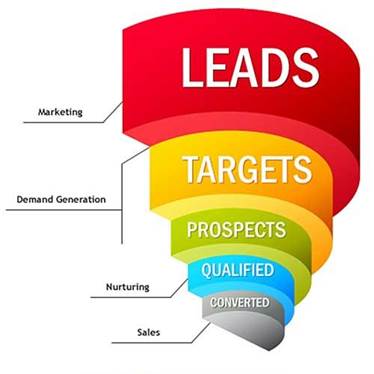
1. Always add to your pipeline.
Not continuously adding to your pipeline is often a mistake that salespeople make once they have established a strong ongoing sales funnel. If you continue to add to your sales pipeline then if that long established client decides that this month they will not buy, then it does not matter because you have more potential opportunities in your pipeline.
If you are always taking the position of helping and assisting your client then your pipeline will increase. If you are only filling up your pipeline when you are desperate then many clients will sense that and you will come across as desperate.
2. Never assume they need you.
I have noticed that many salespeople leave a message with a client or a voicemail and they think it ends there. They think that they have done what they had to do and then move on. Depending on the relationship you have with that client they may or may not call you back. If you do want to do business with them then you have to plan that call and decide the ongoing strategy to get the person to respond. Create a proactive message for them to call you back.
3. Sales potty training.
For those that may have had young children there was a time when you had to train them to go to the toilet. In my experience (a while ago) I always used to say “Pee or get off the pot”. In other words, make a decision.
There will be times when you have to make a decision to get off the pot. Some clients need to be let go. You need to figure out if a prospect is serious about working with you or not. A good pipeline is full of qualified prospects and not “tyre kickers”

All pipeline activities have to support your key messages and understanding actually who your client is and where they play is vital to successful sales.
Good selling
Mike