In the media, and lots of products that have a life cycle, this is a common concern that clients have.
When I first landed in the US in the mid-to-late 90s, selling long-term advertising solutions for radio stations in South Carolina, they had never heard of an offer that would span over any more than 13 weeks.
Here was this Kiwi with a weird accent called Mike (Everyone called me Mark)
selling the concept of a 12-month advertising contract.
Our first gig was in a small town called Greenville, South Carolina. The station was called 93FM Country.
They had changed the format mid-term of our planning and threw us a dog basically.
The Chairman of Ideas and I had convinced the owners of this station, which had about 3% market share, to sell advertising offers using seminars. They thought we were mad.
After a few weeks of planning, we launched and sold $300k in a week. Yip smashed it.
They could not believe it. We went on to run a successful business in the US for many years. Thanks to a couple of smart guys who knew the market.
So, what happens when you get this sort of question?
“I don’t want to commit to a long-term contract.”
Get into a conversation:
Try this:
“That’s completely fair. Would you be open to hearing if there is a flexible option that might work better?”
PLUS, whenever you are ready…here are 3 ways I can help you grow YOUR business.
1. Grab a Free copy of my book
It’s the sales roadmap to attracting prospects, building, and making more sales in your business without coming across as salesy- Click Here.
2. Join the Sales Mindset Inner Circle and connect with salespeople like you.
It’s our new Facebook community where salespeople learn to get more income, enhance their ability, and get access to exclusive content- Click Here
3. Join –“Sales Mindset Blueprint: (INVITATION ONLY) Elevating perspectives, boosting confidence, driving results and not coming across as salesy. Reply to SALESY, and I will get you the details.
In these days of trying to stand out, here is an idea that might just get your proposal directly onto the decision maker’s desk.
What’s the next best thing to face-to-face?
Here’s my tip for this week and it’s about standing out with your clients.
I talk to a lot of my clients and a lot of their salespeople see a client, draft a proposal, and then they send it out by email.
And guess what?
They don’t have the opportunity to present face-to-face.
However, the more important thing is they don’t have the opportunity to stand out in front of the client.
Now I accept that sometimes a client will need some sort of proposal sent to them after you’ve made all the agreements, which tends to be the way that I operate.
To make that proposal stand out a little, here is an idea.
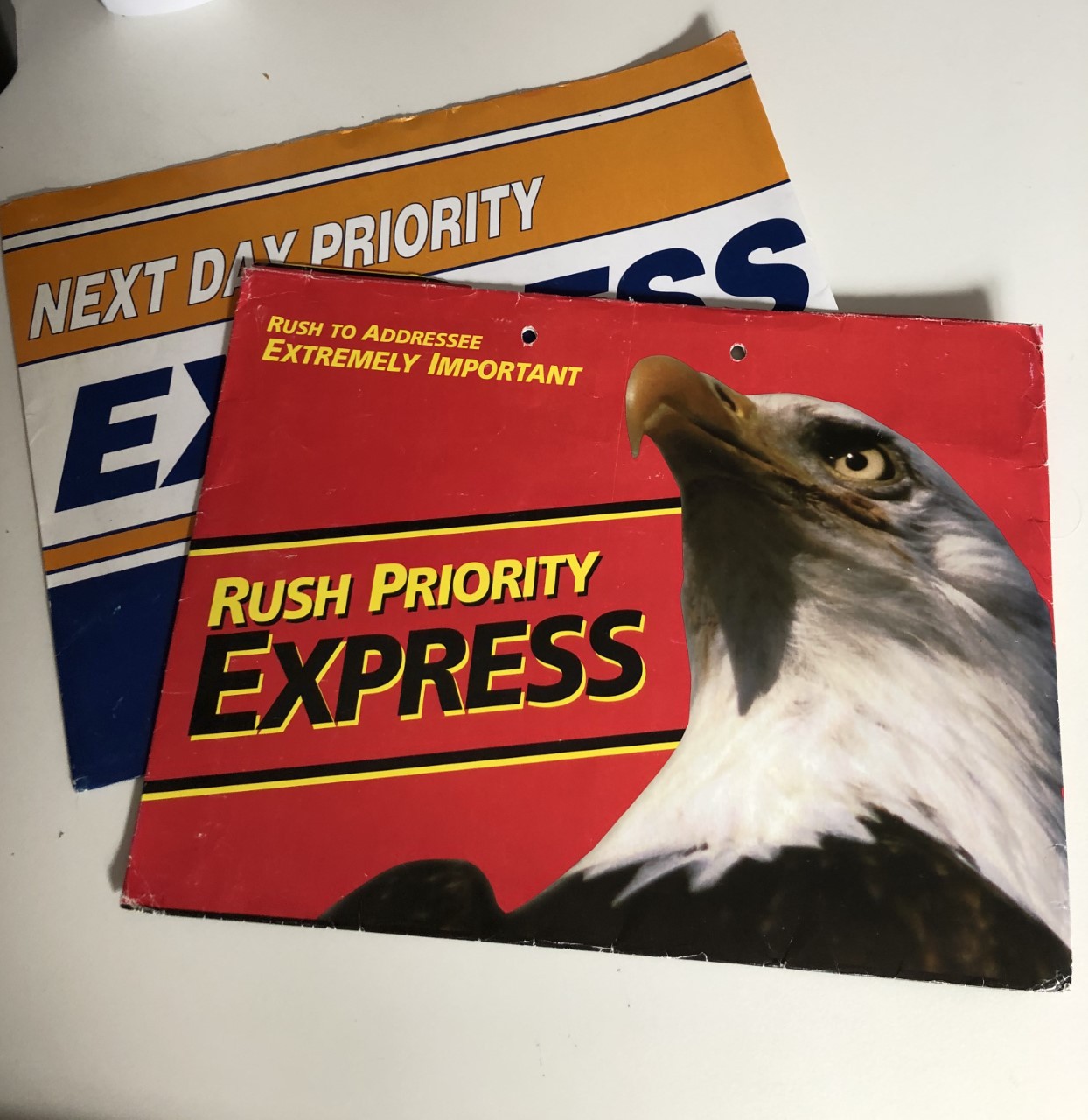
Envelopes that sell
Why don’t you use one of these?
Envelopes that are specially printed to look just like a priority courier pack.
Here’s a couple of examples.
Imagine taking your finished proposal and placing it in the envelope, then addressing it directly to your client.
What do you think’s going to happen?
Do you think if that landed on your desk, you would open it?
You bet you would, and that’s the secret!
That’s the way to get in front of people more effectively.
Standing out with an envelope that sells, is a much better option than a plain, boring, old white envelope.
Even worse an email.
And, that’s my tip for this week.
Have a great week and I’ll talk to you again soon.
Whatever career you decide to take in sales, it’s always good to get some help.
Mike Brunel started mikebrunel.com after being a successful entrepreneur and founder of NRS Media. He co-founded NRS Media in Wellington, New Zealand, expanded it into a global powerhouse in media sales and training, and was eventually responsible for opening offices in London, Atlanta, Toronto, Sydney, Capetown, and Bogota. He has hired hundreds of salespeople around the world.
He made a lot of mistakes when it came to hiring his superstars. Check out his How to Hire A Super Salesperson Each and Every time – It’s packed with tips and ideas on how to hire great salespeople. Don’t ever Hire Bad Salespeople Ever Again. Promise!
Several years ago, when attending one of Robert Kiyosaki’s courses, he told the group the story of the Black Door.
It was about a young man and a Persian general.
The young man, it is said, was a prisoner of war, and the general was a very fair man. When the day arrived to decide the prisoner’s fate, the general brought the prisoner before him.
The young man was confident of death, but the general generously gave him two choices.
On the young man’s left was a firing squad, guns poised and ready.
On the right was a plain white wall with a large black door in the middle.
The young man was given a few moments to determine his fate…the firing squad or the black door.
The young man made his choice, and in a short while, a volley of shots rang out, and the prisoner crumpled to the ground.
The general shook his head and commented to his aide that in all his years, he had seen only a few men choose the black door.
“May I ask, sir,” the aide queried- “what lies beyond the black door?” “Freedom.” The general replied.
“The black door leads to freedom, but I have seen only a few men choose it because they fear what horrors may lie beyond.
Most would rather choose a fate that they know, even if it means death than experience the unknown. The man brave enough to choose the black door deserves freedom.”
Today, in the world of sales, we know that change is always upon us.
The sad thing is that many salespeople would rather stick with what they know than what they don’t know.
We experience change in our lives every day; it’s a part of life.
Sales is no different; there will always be an underlying principle to selling, but there is also the unknown.
What does that look like? – It comes in many forms: the approach to selling, discovering, and understanding your client’s needs.
These are often driven by them, not you.
The most successful salespeople I know are constantly learning and loading up on new information.
Dan Sullivan, at Strategic Coach, has a great saying. “Our eyes only see, and our ears only hear what our brain is looking for.”
Are you ready to choose The Black Door?
Dedicated to your sales Success.
Mike
PLUS, whenever you are ready…here are 3 ways I can help you grow YOUR business.
1. Grab a Free copy of my book
It’s the sales roadmap to attracting prospects, building, and making more sales in your business without coming across as salesy- Click Here.
2. Join the Sales Mindset Inner Circle and connect with salespeople like you.
It’s our new Facebook community where salespeople learn to get more income, enhance their ability, and get access to exclusive content- Click Here
3. Join –“Sales Mindset Blueprint: (INVITATION ONLY) Elevating perspectives, boosting confidence, driving results and not coming across as salesy. Reply to SALESY, and I will get you the details.
Personally I always make a point to acknowledge and celebrate the goals I’ve accomplished.
This recognition is a vital part of the journey, reinforcing positive behaviors and attitudes.
However, it’s equally important to ask ourselves, “Why did some goals remain unfulfilled?” These goals were significant enough to be set, yet they remained elusive.
This self examination could be the key to understanding and overcoming the barriers to your success.
“What have I learned?
Some goals might have been too ambitious,
Or, I didn’t allot a realistic timeframe to achieve them.
Perhaps I didn’t dedicate the necessary resources, or my emotional commitment wavered. T
he passion and consistent effort I applied to my successful goals might have been lacking in others. Additionally, consistent monitoring and adapting were sometimes missing.
In my upcoming article, I’ll share strategies to overcome these obstacles.
The Salesperson’s Checklist: Honing Your Questioning Skills
Over the last few weeks, we have been talking about all sorts of questions. Sales Questions, personal questions, goal-setting questions, open questions,
In the dynamic world of sales, the ability to ask the right questions is a game-changer.
As promised from last week’s blog, here’s a practical checklist I compiled from these articles to help you think about having effective conversations and better results.
1. Prepare Your Mindset
Understand the value of questions in building relationships.
Shift focus from selling to learning about the client’s needs.
2. Research Your Client
Gather background information about the client and their business.
Identify potential challenges they might be facing.
3. Develop Open-Ended Questions
Create questions that cannot be answered with a simple yes or no.
Ensure your questions are relevant to the client’s context.
4. Practice Active Listening
Focus fully on the client’s responses.
Avoid planning your next question while listening.
Show that you are listening through nods and affirmations.
5. Follow-Up Questions Are Key
Develop follow-up questions based on the client’s responses.
Dig deeper to uncover underlying needs or challenges.
6. Balance the Conversation
Ensure that the client does more talking than you.
Guide the conversation without dominating it.
7. Read Non-Verbal Cues
Pay attention to the client’s body language and tone.
Adjust your approach based on these cues.
8. Reflect and Learn from Each Interaction
After each meeting, review what went well and what didn’t.
Continuously refine your questions based on past experiences.
9. Practice, Practice, Practice
Regularly role-play sales scenarios with colleagues.
Seek feedback on your questioning technique.
10. Stay Curious and Empathetic
Maintain genuine curiosity about your clients’ needs.
Cultivate empathy to connect with clients on a deeper level.
Regularly revisiting and updating your approach to questioning can lead to more meaningful client interactions and successful outcomes. Remember, the right question at the right time can make all the difference.
Good selling this week.
Mike
PLUS, whenever you are ready…here are ways I can help you grow YOUR business.
Last week, our blog highlighted the importance of keeping the client engaged by asking the right questions. This week, we delve deeper into the art of using open-ended questions in sales conversations.
Mastering Open-Ended Questions
“Harnessing the Power of Open-Ended Questions.”What exactly are open-ended questions?
These are inquiries that prompt more than just one-word responses. They open the door to detailed answers, lists, clarifications, or expansive information about a client’s needs.
Examples of Open-Ended Sales Questions
How you frame your questions can dramatically alter the course of your sales dialogue. Let’s explore some examples:
What do you expect from your salesperson?
Can you elaborate on that?
How would you describe your ideal product?
Tell me about your experience purchasing a similar product.
What are the limitations of your current product?
Could you specify what features you’re looking for?
Which colours do you prefer for this product?
When would be the ideal delivery time for you?
Why does that particular shade appeal to you?
Each question requires a response beyond a simple ‘yes’ or ‘no’, paving the way for a richer, more informative conversation.
Beyond Yes or No: The Impact of Open-Ended Questions
Open-ended questions do more than elicit lengthy responses; they steer the conversation away from just price haggling, opening avenues to truly understand the client’s problems and how your product or service can offer solutions.
The Art of Listening for Clues
Asking open-ended questions does something else: it allows you to listen for clues. These clues often manifest as problems the client faces, and each problem is an opportunity for you to present a solution.
Looking Ahead: Practice Makes Perfect
Next week, we will delve into practical tips using a simple checklist. Until then, happy selling!
Mike (open-ended-questions) Brunel
PLUS, whenever you are ready…here are ways I can help you grow YOUR business.