
by Mike Brunel | Aug 5, 2026 | Sales
Years ago at NRS Media, I hired a guy who interviewed better than almost anyone I’ve ever met.
Confident. Sharp answers. Great eye contact. If interviewing were the job, he’d have been my best rep by a mile.
Six weeks later, he hadn’t booked a single meeting.
He was wired to talk about selling. Not to do it. And the interview never showed me that, because I was asking the wrong questions.
That mistake cost me a seat, a salary, and months of coaching someone who was never going to close.
The Problem
Most sales leaders hire off the interview. That’s the whole problem.
An interview rewards people who are good at interviews. Confident talkers. Smooth answers. People who know what you want to hear and say it back to you.
None of that tells you if someone can actually sell.
I’ve sat across the table from hundreds of candidates over 30 years. The best talkers in the room are not always the best closers in the field.
Sometimes they’re the opposite. The quiet one who fumbles the small talk turns out to be the one who won’t quit on a deal. The smooth one who nails every answer turns out to fold the second a prospect says no.
You can’t see that in a normal interview. You need different questions.
The Insight
Here’s the thing most sales leaders get wrong.
They think a bad hire is a training problem. Give them a script, a process, some coaching, and they’ll come around.
Most of the time, that’s not it.
Most sales problems aren’t training problems. They’re hiring and wiring problems. If the wiring isn’t there, training won’t fix it.
Some people are wired to prospect. They can pick up the phone a hundred times and not flinch at rejection. Some people are wired to close. They can read a room, sense hesitation, and ask for the deal without blinking. Some people are wired for neither, and no amount of coaching will change that.
The job isn’t to fix the wiring. It’s to see it before you hire.
The Framework
I call this the Sales Ladder. Three rungs.
Survival comes from prospecting. If someone can’t generate activity, they can’t survive in a sales role, no matter how good they are once they get in front of someone.
Success comes from prospecting and closing. Now they can generate the opportunity and bring it home.
Excellence comes from prospecting, closing, and role fit. This is the rare one. The person who’s not just good at the mechanics, but wired for the specific role you’re hiring for.
Only a small percentage of salespeople ever reach that third rung. Most sales teams are stacked with people stuck on rung one or two, and leaders keep trying to train their way to rung three.
You can’t train wiring. You can only hire for it, or coach around it once you know what you’re working with.
The Application
So how do you actually see the wiring before you make the hire?
You stop asking questions that reward good talkers, and start asking questions that expose how someone actually handles pressure, rejection, and truth-telling.
I put together the 7 questions I use now, the ones I wish I’d had before that hire at NRS Media. They don’t ask what a candidate thinks about selling. They show you what happens when the easy answers run out.
[Download: 7 Killer Interview Questions That Reveal Whether a Rep Can Actually Sell]
And if you already have a team in place and you’re not sure how they’re wired, that’s a different question.
That’s what the Sales DNA Report is for. In 20 minutes, you’ll know who’s built to prospect, who’s built to close, and who’s sitting in the wrong seat right now.
The interview lies. The wiring doesn’t.
Mike (Rejection) Brunel
P.S. Get started with The 7 Killer Questions to Ask your latest applicant.

by Mike Brunel | Jul 21, 2026 | Sales
Every salesperson gets ghosted. What you send next decides whether that door stays open.
Here’s the problem.
A prospect goes quiet after showing interest. Most people either chase them with three more follow-ups or give up and disappear.
I can promise you this: neither one works. Both come from the same place. Fear of the answer being no.
Here’s the insight.
The email that gets replies isn’t the one that pushes hardest. It’s the one that removes all the pressure.
Here’s the framework.
Four moves make this work. Each one does a specific job.
Subject line: Sorry.
That alone gets it opened. People are curious what they’re being apologised for.
Take the blame first.
“I can only assume I messed something up along the way.” This isn’t weakness. It builds trust and tells them their vendor puts their interests first.
Name the possible reasons.
“Was the price too high? Confusing presentation? Competing priorities?” A menu is easier to answer than an open question. And naming the objection out loud takes some of the sting out of it.
Detach from the outcome.
“Which is not a problem at all.” You’re not chasing the deal. That single line does more to lower their guard than anything else in the email.
Put it together, and it reads like this.
“Hey [name], looks like you’ve decided to pass on working with us, which is not a problem at all. I can only assume, based on your initial interest, that I messed something up along the way. Sorry about that. Would you be open to sharing some feedback so I can do better next time? Was the price too high? Confusing presentation? Competing priorities? Either way, I know there’s a lot competing for your time and attention. Thanks for the opportunity.”
I’ve used a version of this email for years. Ninety per cent of the time, the answer comes back the same way. “No, no problem, Mike. I liked it. Just not ready yet.”
Here’s the application.
Find one contact who’s gone silent on you right now. Write your version of this email. Sorry subject line. Take the blame. Give them a menu. Let them off the hook completely.
Send it today.
Sales is easy. Salespeople are made.
Mike (Rejection) Brunel
by Mike Brunel | Jul 15, 2026 | Sales
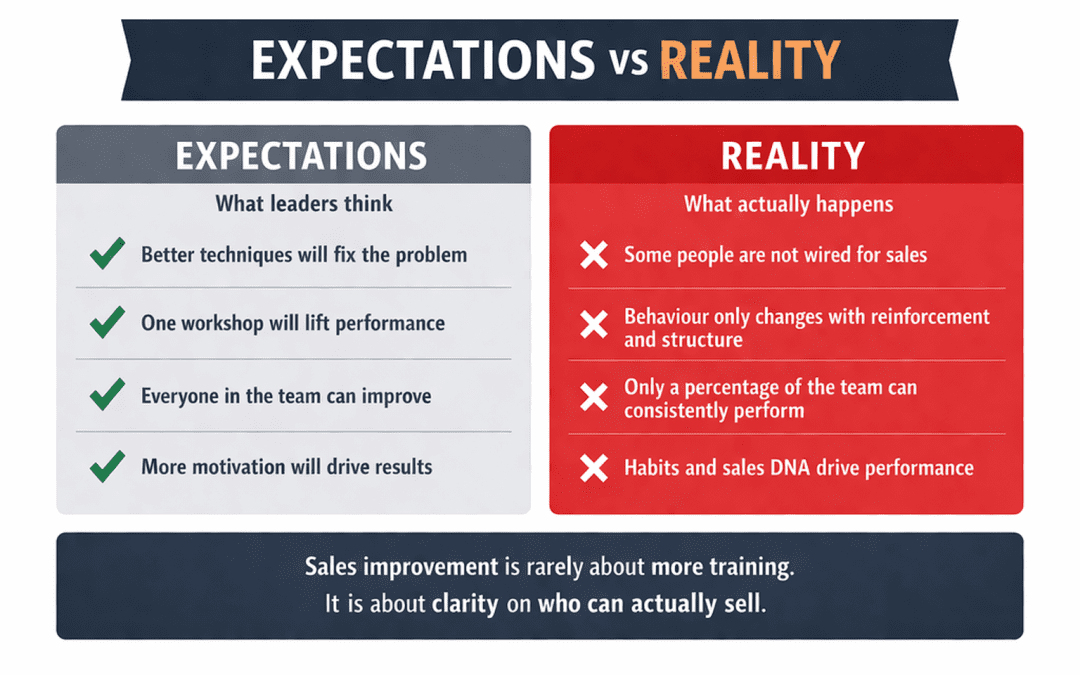
Two Salespeople. Same Company. Very Different Results.
Let me tell you a story about two salespeople.
One is called Victoria. The other is Sam. They work for the same company.
They’ve received the same training, have the same manager, put in similar effort, and complete the same sales activities.
Yet their results couldn’t be more different.
Victoria consistently exceeds her target every month.
Sam works just as hard but always seems to fall short.
So why?
Many Sales Managers assume it’s an attitude or effort problem.
They coach harder.
They send Sam on more training.
They increase activity targets.
But nothing really changes.
Why?
Because the issue isn’t above the surface.
It sits underneath.
It’s not simply about what they’re doing.
It’s about how they’re naturally wired to sell.
Until you understand a salesperson’s natural strengths, blind spots, and coaching needs, you’re often treating the symptoms instead of the cause.
So here’s my question.
How many Sams do you have in your business?
Keep Victoria
More importantly…
What are you doing about it?
Maybe I can help.
I have 2 free spots in my Sales DNA programme every month.
If you want to know more, DM me.
Mike
Sales DNA Coach.

by Mike Brunel | Jul 6, 2026 | Sales
Over the years, I’ve noticed something interesting.
The businesses I enjoy working with most don’t usually have a sales problem.
They have a sales perception problem.
They want more revenue.
They want more opportunities.
They want their people to have better commercial conversations.
But they don’t want to become “salesy.”
You know the stereotype.
The shiny shoes.
The hard close.
The commission breath.
The pushy tactics.
The problem is that many business owners believe the only way to grow revenue is to create more salespeople.
I disagree.
The best businesses I’ve worked with don’t grow by becoming more aggressive.
They grow because they become more commercially confident.
There is a big difference.
Commercial confidence means being comfortable starting conversations.
Being comfortable asking questions.
Being comfortable talking about value.
Being comfortable discussing money.
Being comfortable asking for commitment when the time is right.
Most people already know how to do the technical part of their job.
The challenge is helping them feel comfortable having the commercial conversations that support growth.
That’s one of the reasons I developed Sales DNA.
When performance slows, most organisations immediately jump to training.
More scripts.
More workshops.
More product knowledge.
More sales techniques.
Sometimes the problem isn’t skill.
Sometimes it’s confidence.
Sometimes it’s mindset.
Sometimes it’s natural sales wiring.
Sometimes it’s a lack of structure.
Before we tell people what to do, we need to understand what’s actually getting in the way.
The businesses that get the best results are rarely trying to create a team of salespeople.
They’re trying to create a culture where people are confident enough to create opportunities, build relationships, ask for business, and follow through consistently.
That’s a very different objective.
The goal isn’t to make your team more salesy.
The goal is to make them more commercially confident.
And when that happens, revenue growth tends to follow.
Have a great week selling your stuff.
Mike Brunel
by Mike Brunel | Jun 22, 2026 | Sales, Strategy, Uncategorized
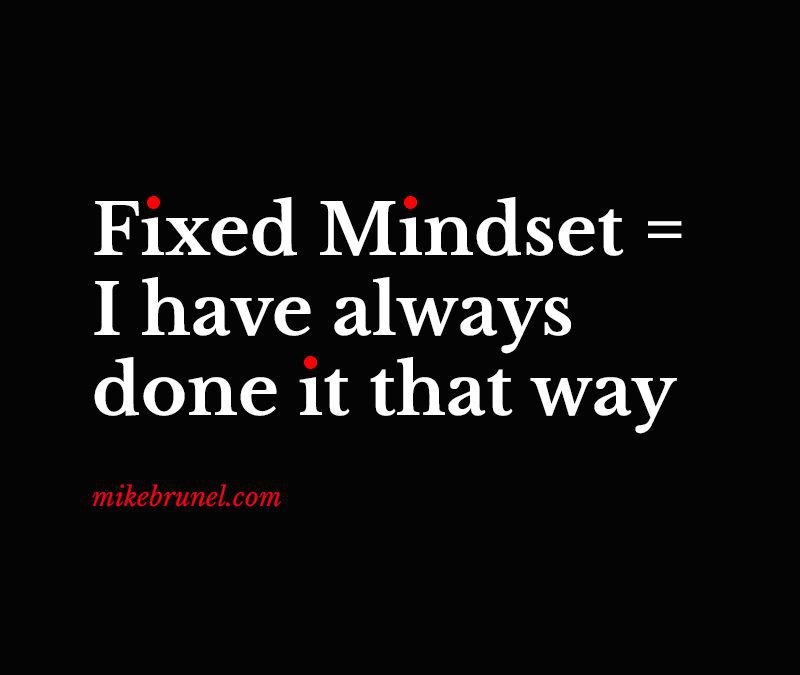
Your sales issue might be a hiring issue, not a training issue.
“We’ve booked them on another course.”
“They just need more confidence.”
“They’ll improve once they know the product.”
Familiar. Logical. Often wrong.
I can talk from experience: many businesses invest heavily in coaching, but see little change in results.
Over the years, I’ve found that the best salespeople usually share three natural qualities: they enjoy prospecting, they’re comfortable asking for commitment, and they don’t let rejection knock them off course.
What we do, though, is chuck a workshop at them, and that’s the training done. Now off you go and get the sales.
With changes in recruitment and AI, use science, good interview questions, and cultural selection.
You owe it to your team.
Let me know if you need this type of salesperson for your team.
Mike

by Mike Brunel | Jun 15, 2026 | Sales
“If we hire good people and train them well, sales performance will improve.”
Training matters. But it can’t replace the underlying Sales DNA that drives consistent results.
In my work, I repeatedly see three traits that separate top performers from everyone else:
- A natural willingness to prospect and start new conversations.
- Comfort in asking for commitment and confidently moving the sale forward.
- The resilience to handle rejection without losing momentum.
When those traits are missing, even the best coaching and sales processes struggle to bridge the gap.
Skills can be taught. Scripts can be learned. Systems can be implemented.
But if the core Sales DNA isn’t there, performance often plateaus well below expectations.
Before investing more in training, ask yourself: Are you developing skills… or trying to compensate for a lack of Sales DNA?
Hire Slowly, fire fast.
Mike
