by Mike Brunel | Sep 26, 2022 | Negotiation, Strategy
Do you know the difference between a small sale and a large Sale
An excellent book that I have tucked away in my library is called Spin Selling by Neil Rackman.
In Neil’s book, he maintains that there is a difference between a small sale and a large sale and different philosophies are used for both. I consult with a lot of commission-based salespeople, including real estate agents and media salespeople. Many of their transactions are large. Knowing the difference between a big sale and not so big sale is handy to know for these salespeople.
If you are able to know the difference between a large sale and a small sale you might just be able to save a lot of time when you go to prospect.
So what is the difference?
How does that relate to your long-term success?
If you can grasp this idea you will be able to avoid all those frustrating “no calls” you keep making and begin to focus on the calls that do matter.
The general rule for small sales is the one from Neil’s book.
He is sitting in an airport waiting for a connecting flight; he was browsing in a store and spotted one of those multipurpose knives, like the Swiss Army knife, the price of $15.
Within 2 seconds of seeing it, he bought it and his immediate need was satisfied. To him, it was what I call a no-decision decision.
Now, what about a bigger sale? Let’s take another scenario, you are meeting your client for the first time, and potentially that client could invest with you several thousand dollars worth of products or services.
Are you going to get him or her to buy on the first call?
The best way to approach the larger sale is to expect that it may take a little longer. They simply have different needs than smaller sales.
Here a sure-fire way to make sure that you do know the difference:
- A larger sale will contain more than one decision maker
- A larger sale involves asking more specific questions about their problems and moving them up to solutions.
- Larger clients tend to take a more rational approach to decision-making than smaller clients.
Do this on a regular basis and monitor what are your small sales and your larger sales.
One action you can take straight away is to write down all your larger clients based on spend and see if this does stack up against the criteria above.
List all your larger clients in a notebook and begin to ask questions to discover their needs over time.
Have great fun selling your stuff.
Mike

PLUS: WHENEVER YOU’RE READY…
Here are 4 ways I can help you make more sales in your business – whether your business is big or small.
1. Want to become a Sales Mindset Blueprint Member? Every month you get access to an exclusive coaching session with me as well as full access to my sales programme. Get the deets here.
2. Try the new ‘7 Days to Sales Success’ framework. Make more sales in 7 days. The framework of everything you need to get started in making more sales in your business. The Sales Success Framework is based on a simple 7-day challenge. Click here to find out how you can grow your business by making more sales.
3. Join our private Facebook group – The Sales Mindset Inner Circle. Get all the latest up-to-date sales ideas. Every week we do Facebook Live updates on all things sales. Tips, ideas, free coaching, and much more. Join me by clicking here
4. Work with me one-on-one.If you’re a business owner, small or large or in professional services you might just be a few strategies, tactics and tools away from doubling your lead flow, revenue and impact. Jump on a FREE 15-minute brainstorm call with me by clicking here.
Good Selling
by Mike Brunel | Sep 12, 2022 | Strategy

When I came into media, my main challenge was to sell something invisible. I learned that people buy ideas more than things. They buy concepts, promotions, and methods for getting people into their stores.
In the early 90s, the media industry in New Zealand was entering deregulation. The government had decided to “open up the airwaves” and issue new opportunities for starting radio/media companies. Doug Gold, the original owner of More FM (now Mediaworks) recognized an opening when he saw one. He obtained several licenses to operate new radio stations in cities and towns all over the country.
Culture First- The Rest Follows.
Doug had created an amazing culture and fun way of doing business at media companies he had previously managed. Once word got around that he was starting a new venture, former staff flocked to be on the journey with him. Some would not receive any income for several months, but they trusted him and believed his latest project would be special.
The challenge for the new media enterprise was that they would be working in one of the most competitive categories in the world. Media bleeds money like a wounded bull, and it is riddled with failures, obnoxious personalities, and owners with huge egos.
Doug’s personality, on the other hand, was just the opposite. He had courage, belief, and an unbending single-mindedness; the usual hurdles would not present a problem for him.
Starting on an unusual note, Doug launched his new company with a product called The Gold Key program. When Doug had researched the best way to enter the advertising market, he sought advice from hundreds of clients.
Needs Matter
He asked questions about everything. He asked what they wanted in their advertising, examined their paths in sales and marketing and observed their needs.
He knew it would be much easier—and less daunting—to ask for someone’s business if he already knew what that prospective customer needed. He was involved in every aspect of the business, down to the formatting of his stations’ programmes.
One of the insights Doug gained from his research was that his advertising clients were sick of just buying “spots and dots.” They wanted to belong to a group, a modern-day tribe of sorts.
Doug also discovered that clients needed to advertise and promote themselves continually. Constant exposure paid off and made advertising more affordable to small-to-medium companies. Many big companies already supported their products and services this way, and it worked well.
They were the big guys, though; they could afford it; with their resources, they could simply outshout anyone else’s marketing. Now even the little guy could compete.
When it has gone, it’s gone.
Most media companies generate their income through advertising. It’s their inventory, just like all the stock in a retail store. The only difference is if that “inventory” is not sold that minute, hour, or day, then the opportunity at that moment is gone forever. Once the advertisement due to be sold at midday is NOT sold, it’s gone. The use-by date has expired.
The American Express of Media
Doug understood his clients and the market, so he created a membership program. He asked his clients to commit to him for twelve months. Each advertiser would receive a monthly allocation of commercials; in return, they received benefits like travel deals, access to unsold airtime, and upgrades to better commercial times. While perks like this are common today, they were a novelty in media back then.
What is often referred to as “one-to-many” selling works best in a seminar situation. Every client attending Doug’s seminar received valuable information on advertising and promoting their business.
Any advertiser who agreed to membership also earned a free chance at winning a brand-new BMW. This was unheard of at the time. It was mind-blowing, really, and took the market by storm.
In year one, Doug and his amazing team sold $1.2 million in revenue before they even opened the media company and before one song was played. In today’s dollars, that would be around $4.6 million. What sold it?
Creating a Selling System.
The key was a combination of belief, systems, a great team, and innovation. Doug generated hundreds of memberships and improved his already stellar reputation.
Over several years, Doug’s product became known as the Image Plus program. With my other founding partner, Brian Duffy, driving the helm and me writing all the sales manuals and implementing the training programmes, we then took on the world.
These days, one product is part of a suite that my old company NRS Media (Since sold), sells to over 400 media companies in twenty-three countries, in eleven languages. In the past 25 years, the Image Plus program has generated over $1 billion in annual revenue for its clients.
The start of something special. These days you would have called it a start-up. The only difference is that over the next 20 years, NRS Media never borrowed a cent, zip, or zero. All self-funding by its owners.
An idea is tested, refined, and then proved.
Why did it sell? The market was ready for it. The media companies’ advertisers wanted to buy it, and in the end, 150,0,000 of them bought it every year for 15 years.
And now there is more to come, something new for media companies.
Keep you posted.
Mike
PLUS: WHENEVER YOU’RE READY…
Here are 3 ways I can help you make more sales in your business – whether your business is big or small.
1. Try the new 7 Days to Sales Success Framework.
Make More Sales in 7 days. The framework of everything you need to start making more sales in your business. The Sales Success Framework is based on a simple 7-day challenge. Click here to find out how you can grow your business by making more sales.
2. Join our Private Facebook Group – The Salesmindset Inner Circle. Get all the latest up-to-date sales ideas.
Every week we do Facebook Live updates on all things sales. Tips, ideas, free coaching, and much more. Join me by clicking here.
3. Work with me One-on-One.
If you’re a business owner, small or large or in professional services, you might just be a few strategies, tactics and tools away from doubling your lead flow, revenue and impact. Jump on a FREE 15-minute Brainstorm call with me by clicking here.
by Mike Brunel | Aug 30, 2022 | Strategy, Uncategorized

In my post What you can Learn about Sales Training from a Cab driver in London. I promised I would give you some practical tools and ideas that you can use in your business using this SWOT model. Here they are.
Strengths are where the secrets are.
The question for your business, then, is how do you know what you—and your salespeople—don’t know? One way to develop insight into your own company is to use a SWOT analysis of your products and services.
The SWOT framework comes from Albert Humphrey, who tested the approach in the 1960s and 1970s at the Stanford Research Institute. Developed for business and based on data from Fortune 500 companies, the SWOT analysis has been adopted by organisations of all types as a decision-making tool.
As its acronym implies, a SWOT analysis examines four elements:
- Strengths: Internal attributes and resources that support a successful outcome.
- Weaknesses: Internal attributes and resources that work against a successful outcome.
- Opportunities: External factors the project can use to its advantage.
- Threats: External factors that could jeopardise the project.
When I do my sales training and coaching sessions with my clients, I carry out a simple audit to discover a SWOT analysis of their sales process:
Strengths:
- What are you the best at?
- Why do customers buy from you?
- What are your competitors’ benefits?
Weaknesses:
- Where do you need to improve?
- Are there any gaps in product lines?
- Should you add a guarantee?
- What’s preventing you from making more sales?
Opportunities:
- How can you take advantage of your new knowledge?
- Is there something unique you have to offer?
- What do these facts tell you about the future?
Threats:
- Is this the right product or service for the current market?
- What happens when the market changes?
- Do you need to evaluate your clients?
- Do you have a sales mindset?
- Do you train well and consistently?
- Does your team believe in your mission?
Evaluating your offerings helps you develop the insight necessary to sell them. Let’s look at one example of how insight, or lack of it, affects everyday sales interactions.
Your clients sometimes know more than you.
Imagine someone comes to your store intending to buy. They already have an interest in the product. They quite reasonably make an inquiry with the salesperson. This is where the relationship between seller and buyer can quickly break down. If the customer expresses interest in an item and the person who can sell it to them doesn’t demonstrate enough insight, the sale will drop dead right there. The once-promising customer will walk right back out that door.
For instance, suppose an appliance store supervisor has only trained the sales staff with minimum product knowledge. The salespeople on the floor know that a washing machine has a lid at the top, and it opens when you press a button, and that’s it. Your customers already know these basic facts and a lot more. The Internet now allows people to research your product thoroughly. If you are not careful—if you don’t always have some sort of valuable knowledge to add—you will lose the sale.
Plan your story about your product
Work out your strengths, weaknesses, and opportunities ahead of time and try to match them up against your competition. You want to be able to convince the customer of the benefit of choosing your product over any other.
SWOT Analysis Questions:
- What are the three key benefits of your product?
- What is the immediate benefit of using the product?
- What information is this benefit based on? What’s the evidence?
- Is this product as good as it sounds?
- Does it have some sort of guarantee?
- Is it unique?
- Have I asked why my clients buy from me?
- If a prospective client bought this product from someone else, why?
- Why did a prospective client buy something similar in the past? Was it the delivery? Was it free shipping?
Asking these questions helps you formulate the best way to demonstrate your product knowledge. When a person buys a mobile phone, what does your store or service offer that differs from the store down the road? Ask yourself what problem you are trying to solve.
You’re not selling a phone; you’re selling a solution. Does the customer want faster download speeds? Great, because your company happens to have access to the speediest network around. Do they need a predictable monthly bill? Tell them about your recently launched steady rate package. Share those facts, and chances are the customer will buy from you, not any of the other six phone stores in town.
Do they need a predictable monthly bill? Tell them about your recently launched steady rate package. Share those facts, and chances are the customer will buy from you, not any of the other six phone stores in town.
Someone reading this blog might have ten, twenty, or only two employees. However large or small your staff, you need to train them to research your product’s strengths. Teach them to look for the key benefits and why people buy them.
by Mike Brunel | Aug 22, 2022 | Strategy, Uncategorized
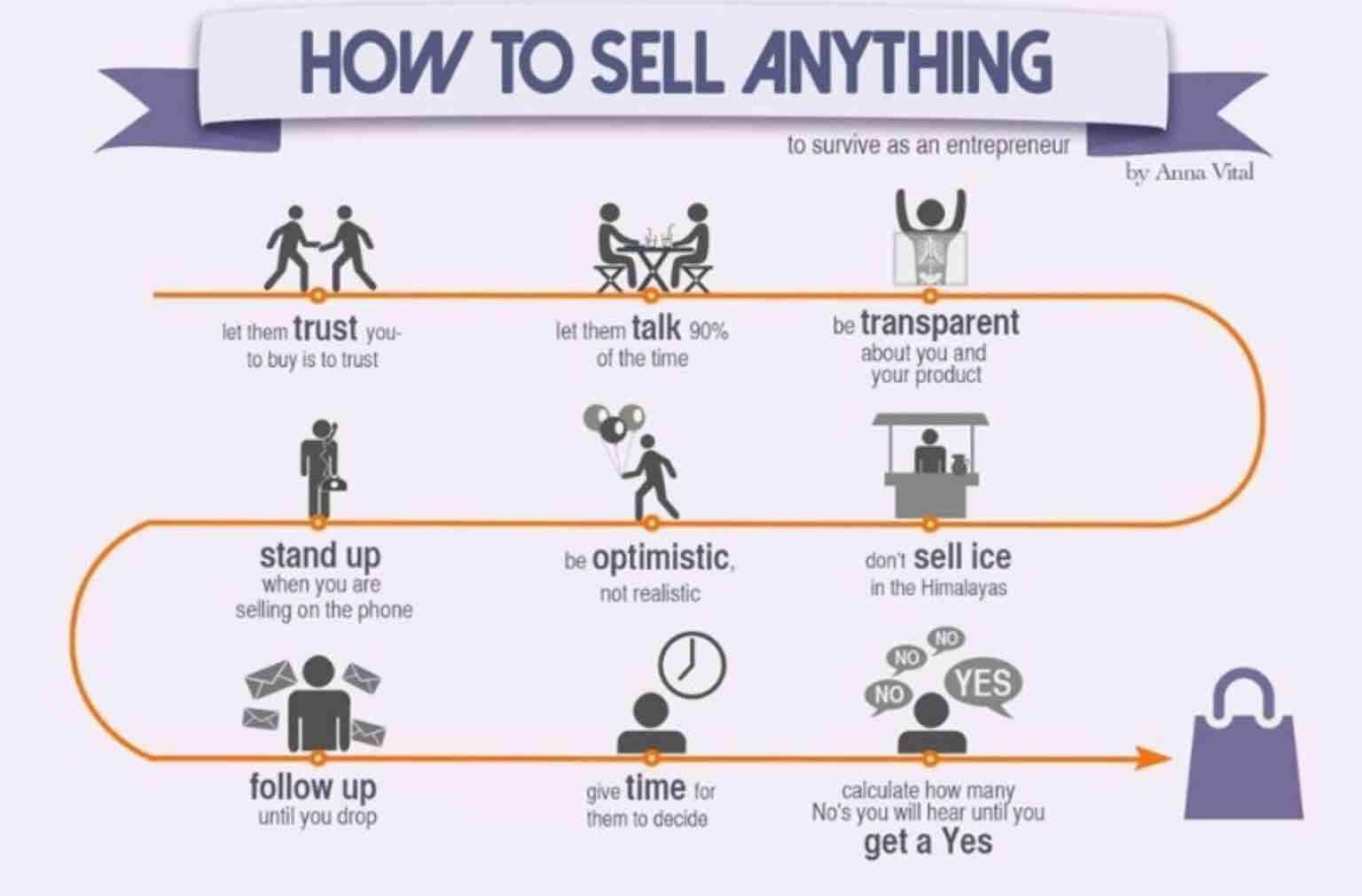
This week’s blog talks about the importance of product knowledge or Insight.
In the context of sales, Insight means understanding your product. It also means understanding your own business’s strengths and weaknesses.
London Black Cabs.
For example, London’s traditional black cab drivers rely on “The Knowledge” to set them apart from other transportation services.
Pay a visit to London, and a black mini cab will probably be one the first things you will see. London taxi drivers are almost as famous as the black cabs they drive.
Their fame stems from their incredibly comprehensive knowledge of the city. Hail down a black cab in London, and you can be assured that the driver will find the shortest route to your destination without the aid of any technology.
Is it better than Uber?
London taxi drivers go through stringent training to obtain their licenses. They need to pass “The Knowledge” test; studying for it is often likened to having an atlas of London implanted into your brain.
To become an All-London taxi driver, you need to master no fewer than 320 basic routes, all of the 25,000 streets scattered within the basic routes, and approximately 20,000 landmarks and places of public interest within a six-mile radius of Charing Cross.
It takes the average person between two and four years to learn “The Knowledge”. This education is a big investment, but the training sets this service apart from the competition, whether GPS gadgets or Uber drivers.
In fact, on the ground, a black cab driver will always out-perform the Uber driver. Their extensive, specific knowledge offers an opportunity to reposition themselves as the ultimate experts.
Pay for what you want!
Customers are willing to pay for this good service, and the only way to make it this good is to have true insight into your product.
The question for your business, then, is how do you know what you—and your salespeople—don’t know?
This is where sales training and sales coaching comes in.
One way to develop insight into your own company is to use a SWOT analysis of your products and services.
The SWOT framework comes from Albert Humphrey, who tested the approach in the 1960s and 1970s at the Stanford Research Institute. Developed for business and based on data from Fortune 500 companies, the SWOT analysis has been adopted by organisations of all types as a decision-making tool.
As its acronym implies, a SWOT analysis examines four elements:
- Strengths: Internal attributes and resources that support a successful outcome.
- Weaknesses: Internal attributes and resources that work against a successful outcome.
- Opportunities: External factors the project can use to its advantage.
- Threats: External factors that could jeopardise the project.
Next week’s blog will give you some practical tools and ideas that you can use in your business using this SWOT model.
Until then, good selling.
PLUS: WHENEVER YOU’RE READY…
- Here are 4 ways I can help you make more sales in your business – whether your business is big or small.1. Want to become a Sales Mindset Blueprint Member? You get access to an exclusive coaching session with me and full access to my sales programme every month. Get the deets here.
- Try the new ‘7 Days to Sales Success’ framework. Make more sales in 7 days—the framework of everything you need to start making more sales in your business. The Sales Success Framework uses a simple 7-day challenge. Click here to find out how you can grow your business by making more sales.
- Join our private Facebook group – The Sales Mindset Inner Circle. Get all the latest up-to-date sales ideas. Every week we do Facebook Live updates on all things sales. Tips, ideas, free coaching, and much more. Join me by clicking here
- Could you work with me one-on-one? If you’re a small or large business owner or in professional services, you might have a few strategies, tactics and tools away from doubling your lead flow, revenue and impact. Please jump on a FREE 15-minute brainstorming call with me by clicking here.
Mike
Image courtesy of Anna Vital.
P.S
Coming soon Changing Your Sales Mindset- 7 Day Challenge

by Mike Brunel | Jul 25, 2022 | Sales, Strategy
When I owned NRS Media, Michael Botta was one of the best sales guys.
Michael was one of our longest-standing staff members at NRS Media and was based in our Long Beach office in good ‘ole’ USA.
He was in front of thousands of media salespeople each year and travelled for weeks on end with our NRS Media message.
He understands the importance of work. Here is his definition of W-O-R-K:
W: Weighing
O: Opportunities
R: Repeatedly
(with)
K: Knowledge
We come to work, and what makes it frustrating for many of us at times is that we are challenged to continually Weigh (consider, ponder, create) the Opportunities (challenges, problems, setbacks) that are Repeatedly uncovered during our day, which then causes us to tap into our Knowledge (experience, success, etc.) to fix the problem.
This is a never-ending process.
Is work a gift?
Work should be viewed as an incredible gift that makes us more helpful to others. Businesses all over the world are happy to compensate you for your WORK.
Work is the giving of yourself to help another. Work is the best thing for us because, by its very nature, it brings out our best qualities, intentions, and solutions.
What work isn’t:
If, on the other hand, one views’ W-O-R-K’ as: Wanting Others to Replace my Knowhow, then that individual is essentially holding back their unique gift and perspective and not giving of themselves to help another.
Work for some people is merely something they have to do and not something that provides them with an open the door to use their creativity – or is not viewed as a unique opportunity to share their creative insight for the benefit of another.
Fear, disappointment, rejection, anger, and blame keep one from doing their best WORK.
How we view WORK significantly impacts ourselves, our families, and the benefit of others. By doing our best WORK, we can change lives for the better.
A great reason to get up and work every day, make sure you do something you love.
Thanks, Mr Botta!
Whatever career you choose in sales, getting help is always good.
That’s why you can get FREE in your inbox every morning for 7 days; the 7 Day Sale Challenge.
Hop on over here and subscribe.
For more content like this, please subscribe to my YouTube channel.
Good selling.
PLUS: WHENEVER YOU’RE READY…
- Here are 4 ways I can help you make more sales in your business – whether your business is big or small.1. Want to become a Sales Mindset Blueprint Member. You get access to an exclusive coaching session with me and full access to my sales programme every month. Get the deets here.
- Try the new ‘7 Days to Sales Success’ framework. Make more sales in 7 days—the framework of everything you need to start making more sales in your business. The Sales Success Framework uses a simple 7-day challenge. Click here to find out how you can grow your business by making more sales.
- Join our private Facebook group – The Sales Mindset Inner Circle. Get all the latest up-to-date sales ideas. Every week we do Facebook Live updates on all things sales. Tips, ideas, free coaching, and much more. Join me by clicking here
- Could you work with me one-on-one? If you’re a small or large business owner or in professional services, you might have a few strategies, tactics and tools away from doubling your lead flow, revenue and impact. Please jump on a FREE 15-minute brainstorm call with me by clicking here.
by Mike Brunel | Jul 18, 2022 | Sales, Strategy
In Dan Kennedy’s book ‘No BS Sales Success’, he talks about a real estate agent called Pebby B.
Here is an abridged version…
“Peggy B gets 70% of her listings from referrals and 30% from advertising. When someone wants to list with Peggy, they get put onto one of her three assistants. The assistants vet the clients to see if they fulfil Peggy’s requirements for listing. If they do not, they are passed on to other real estate agents.
If they do, a DVD on Peggy’s successes is sent directly that day to the potential listed property owner.
An appointment is made, but the assistant arrives first (Peggy comes 20 minutes later). While the assistant is there, they go over the data of similar sales in the area, how long sales have taken, price expectations, etc.
Peggy then calls to let the client know she is on the way, arrives, and listens to her assistant’s overview of the property. Next, while they talk, Peggy asks if it is okay for the assistant to take a few photos of the house. (This is a trial close)
Why would they let her go ahead if they were not interested in listing the house?
Peggy then uses her flip book and goes over the ten steps they will operate together to get the best price for the house. An agreement is produced that has been partially completed by the assistant from the information obtained over the phone.
Last year Peggy listed 92% of the homes where she presented this listing immediately, without delay.”
I highly recommend you buy this book to get hundreds of ideas for your sales presentations. I fight for every referral I can get; I have a system in my book to tease up clients before you present your offering.
Any agent in real estate can execute this process with some planning and understanding of what and how essential referrals and structured presentations are.
Please share your ideas on what you do when you first meet a client.
Good selling.
Mike
Whatever career you choose in sales, getting help is always good.
That’s why you can get FREE in your inbox every morning for seven days; the 7 Day Sale Challenge.
Hop on over here and subscribe.
For more content like this, please subscribe to my YouTube channel.
Good selling.
PLUS: WHENEVER YOU’RE READY…
- Here are 4 ways I can help you make more sales in your business – whether your business is big or small.1. Want to become a Sales Mindset Blueprint Member. You get access to an exclusive coaching session with me and full access to my sales programme every month. Get the deets here.
- Try the new ‘7 Days to Sales Success’ framework. Make more sales in 7 days—the framework of everything you need to start making more sales in your business. The Sales Success Framework is based on a simple 7-day challenge. Click here to find out how you can grow your business by making more sales.
- Join our private Facebook group – The Sales Mindset Inner Circle. Get all the latest up-to-date sales ideas. Every week we do Facebook Live updates on all things sales. Tips, ideas, free coaching, and much more. Join me by clicking here
- Could you work with me one-on-one? If you’re a small or large business owner or in professional services, you might have a few strategies, tactics and tools away from doubling your lead flow, revenue and impact. Please jump on a FREE 15-minute brainstorm call with me by clicking here.
