by Mike Brunel | Nov 13, 2017 | Sales, Strategy

Ask yourself these Powerful Questions.
Last week I talked about the importance of asking yourself powerful questions when it comes to conditioning your mindset.
To finish off that discussion here are some business questions you might want to think about as you move into another week of selling.
• What am I most happy/excited about in my business?
• What am I most proud of in my business?
• How does it make me feel to employ other people?
• What am I committed to doing to improve sales
systems?
• How/why do I value my customers?
Set up Systems
With all of these questions, you are asking yourself about your business is it not the time to set up systems to routinize these questions for your sales team so their conversations with customers flow more naturally? Efficiency is especially important with today’s shorter buying cycles and your clients are considering several competitive offers at any one time; there is little time to waste.
What does a quality question look like in practice? A quality question is one that cannot be answered with a simple “No.” Can I help you is the wrong question, because “No, just looking” is not the answer you want? Where can you go from there? Nowhere.
The phrase that you thought was helpful has just shut down the conversation you were hoping to have with a potential client. Is it hard to come back from a dead end? You bet.
The Other Guy’s Shoes
How do you get your sales team to open up the conversation? Get them to think about the customer’s experience. Many salespeople are concerned about coming across as nosy. In reality, there are few topics that are truly off-limits. Obviously, you wouldn’t ask anything too personal, but if you genuinely indicate your desire to help, people are quite willing to talk about themselves.
Keep in mind that the customer’s most urgent need at the moment he or she walks in your door may not be to buy your
product.
It may be something much more basic, like a need to be understood. Before they buy anything, they may want to know that you appreciate them.
The importance of considering the customer’s current circumstances is succinctly told in a famous sales story, called The Man in the Desert.* It goes like this: A man comes into a store after living in the desert for months. The store sells best quality food and clothing, but those are not the first things the customer needs.
What he needs is water. The best conversation starter for this man is a glass of water. Maybe after his thirst is quenched, you will learn that he also needs lunch or a new jacket. He might need other things to help him feel better.
If you sell those things, you are in business. You have opened a dialogue that would never have taken place if you had not recognised the customer’s most basic need.
So many people stop at the glass of water. You almost always have to ask more than one question to find out what the client wants. If that person says, “I’m just looking,” you can respect that, but you know they must have come in for a reason. Have the courage to ask another question.
For example, if someone is looking at a product, ask them what they like about it. Get them talking. The only questions that don’t work are questions that close the conversation.
Of course, for a salesperson to be willing to let the conversation wander, he or she must be prepared with the things we talked about earlier, including sufficient knowledge of the product to confidently answer any questions that come back from the customer.
If you know your product well enough, the answers come intuitively, which makes a sales interaction feel more like a friendly chat.
Have a good week selling your stuff.
Mike
PS. Have you tried the 7 Day Challenge yet? It’s easy and it is FREE.
ABOUT THE AUTHOR.
 Mike Brunel started Mikebrunel.com after being a successful entrepreneur and founder of NRS Media. He co-founded NRS Media in Wellington, New Zealand, expanded it into a global powerhouse in media sales and training, and was eventually responsible for opening offices in London, Atlanta, Toronto, Sydney, Capetown, and Bogota. His products and services are now sold in 23 countries and in 11 languages generating $250 million annually in sales for his clients. Mike sold the company in 2015 and now spends his time following his passions which include rugby, travel. His promise: “I can find thousands of dollars in your business within minutes – GUARANTEED” TRY ME OUT!
*KipTindall. The Container Store.
by Mike Brunel | Oct 31, 2017 | Strategy

Distinguishing between a small and large sale
If you get the chance, read the best-selling book Spin Selling authored by Neil Rackman. Rackman maintains throughout the book that there are fundamental differences between a small and a large sale and require different closing techniques. You will save a lot of time going into the prospect if you can tell the difference.
What defines a small sale?
This is best illustrated in an anecdote from Spin Selling. Rackman describes browsing an airport store whilst waiting for a connecting flight. He comes across a multipurpose swiss army knife and proceeds to buy it immediately for only $15. The length of time between the need arising and purchase was only a few seconds. A short transaction time is just one of the defining elements of a small sale.
Minimal risk is another defining feature of a small sale. Rackman only spent $15 on the army knife so there was a very small risk factor involved. Small sales are often impulsive decisions with emotional motives. Rackman did not need the army knife for any practical purpose and may not have purchased it if he had spent more time rationalising the decision. An emotional motive is more prominent in small sales.
How does a large sale differ?
Let’s use another scenario: imagine you are meeting a client cold for the first time. This client could potentially invest several thousand dollars into your company. So how are you going to get them to buy on the first call?
The best way to approach a sale of this magnitude is to have patience and expect the sale will take longer. Transaction time is longer for a large investment as the need is usually developed over a longer period of time.
Here a few sure-fire tips for learning how to recognise the difference:
- Larger sales contain more than one decision maker
- A larger sale will require asking more specific questions about the customers’ problem and finding a solution
- Larger sales will take longer as they require a rational decision-making approach on the customer or client’s behalf.
Understanding the psychology of your customer or client based on the type of sale you are making will take you a long way in your sales career.
Task
Write a list of all your large sale clients based on the size of the sale, then see if this stacks up against the criteria above.
Over time you should build a list of all your large sale clients in a notebook so you know to to work through all their problems.
Happy selling everyone!
Mike.
Mike Brunel started Mikebrunel.com after being a successful entrepreneur and founder of NRS Media. He co-founded NRS Media in Wellington, New Zealand, expanded it into a global powerhouse in media sales and training, and was eventually responsible for opening offices in
London, Atlanta, Toronto, Sydney, Capetown, and Bogota. His products and services are now sold in 23 countries and in 11 languages generating $250 million annually in sales for his clients. Mike sold the company in 2015 and now spends his time following his passions which include rugby, travel. His promise: “I can find thousands of dollars in your business within minutes – GUARANTEED” TRY ME OUT!
by Mike Brunel | Oct 4, 2017 | Sales, Strategy

Photo – Austin Kleon- Steal like an Artist
“Are Sales are contingent upon the attitude of the salesperson? Or the attitude of the prospect”
I get to hear good stories from all over the world as to how salespeople are making a difference to people’s lives.
In many situations businesses worldwide are feeling (according to them) the pressure of not getting their numbers, the market is tough, it is not like it used to be, people are simply not buying like they used to, the excuses seem to go on and on.
I want to debunk that, it simply is not true. I know that if you offer value, and are committed to your customers, they will buy off you.
Money is still there.
The truth is that the money is always there, it may be less for some, but nonetheless, it is always there, it just moves around. It might move from your business to another, but the facts are that that retail revenue is up in countries like NZ and Australia.
It might move from your business to another, but the facts are that that retail revenue is up in countries like NZ and Australia.
The thing is that businesses have to do things differently; they need to think about how their clients are purchasing their product.
I can guarantee that in most homes these days television and other media is not the main source of entertainment or information.
The internet has become a big part of our lives.
Clients do research your product along with your competitors before they even venture into your store or place of business.
Information is Power.
Many business owners that I have worked with all over the world have had to come to terms with a changing market.
The ones I notice that are doing well train their staff on a regular basis, keep them up to date with all the new products or services, help them make the decisions, this is done usually at least once a week.
In any business product knowledge is based upon attitude, if you visit a store and a staff member does not know their product what happens?
You lose confidence, you are not really sure if they are to be trusted, you might retreat, and go off to someone else.
Want a secret to more Sales?
Product knowledge and information about a product have an invisible benefit. It gives the salesperson the “right attitude” it rubs off. They get confident, and the clients feel that confidence.
Try these simple exercises that work.
Here a just two exercises you can do in your business to get your team to buy into product knowledge training.
- POP QUIZ- write up 10 benefits of your most popular products, list what you think is the #1 benefit for the customer if they buy this product.
- TEST ONE ON ONE, OR IN A TEAM MEETING – Give each of your staff a test on every one of those products. You can do it in written form or as part of their one on one meeting.
These simple tests can give your business a foot up and you might get an extra share of the money that is out there.
Have a great day selling your stuff.
Mike
PS. If you want a simple test format to help you do that then download our 7 day Sales Mindset Challenge. Or if you need help to help your team make more sales or get more leads then contact me.
“Sales are contingent upon the attitude of the salesperson, not the attitude of the prospect” –William Clement Stone.
by Mike Brunel | Aug 21, 2017 | Strategy, Uncategorized

In my post What you can Learn about Sales Training from a Cab driver in London. I promised I would give you some practical tools and ideas that you can use in your business using this SWOT model. Here they are.
Strengths are where the secrets are.
The question for your business, then, is how do you know what you—and your salespeople—don’t know? One way to develop insight into your own company is to use a SWOT analysis on your products and services.
The SWOT framework comes from Albert Humphrey, who tested the approach in the 1960s and 1970s at the Stanford Research Institute. Developed for business and based on data from Fortune 500 companies, the SWOT analysis has been adopted by organisations of all types as a decision-making tool.
As its acronym implies, a SWOT analysis examines four elements:
- Strengths: Internal attributes and resources that support a successful outcome.
- Weaknesses: Internal attributes and resources that work against a successful outcome.
- Opportunities: External factors the project can use to its advantage.
- Threats: External factors that could jeopardise the project.
When I do my sales training and coaching sessions with my clients I carry out a simple audit to discover a SWOT analysis of their sales process:
Strengths:
- What are you the best at?
- Why do customers buy from you?
- What are your competitors’ benefits?
Weaknesses:
- Where do you need to improve?
- Are there any gaps in product lines?
- Should you add a guarantee?
- What’s preventing you from making more sales?
Opportunities:
- How can you take advantage of your new knowledge?
- Is there something unique you have to offer?
- What do these facts tell you about the future?
Threats:
- Is this the right product or service for the current market?
- What happens when the market changes?
- Do you need to evaluate your clients?
- Do you have a sales mindset?
- Do you train well and consistently?
- Does your team believe in your mission?
Evaluating your offerings this way helps you develop the insight necessary to sell them. Let’s look at one example of how insight, or lack of it, affects everyday sales interactions.
Your clients sometimes know more than you.
Imagine someone comes to your store, intending to buy. They already have an interest in the product. They quite reasonably make an inquiry with the salesperson. This is where the relationship between seller and buyer can quickly break down. If the customer expresses interest in an item and the person who can sell it to them doesn’t demonstrate enough insight, the sale will drop dead right there. The once-promising customer will walk right back out that door.
For instance, suppose an appliance store supervisor has only trained the sales staff in the bare minimum product knowledge. The salespeople on the floor know that a washing machine has a lid at the top, and it opens when you press a button, and that’s it. Chances are, your customers already know these basic facts and a lot more. The Internet now allows people to research your product thoroughly. If you are not careful—if you don’t always have some sort of valuable knowledge to add—you will lose the sale.
Plan your story about your product
Work out ahead of time what your strengths, weaknesses, and opportunities are and try to match them up against your competition. You want to be able to convince the customer of the benefit of choosing your product over any other.
SWOT Analysis Questions:
- What are the three key benefits of your product?
- What is an immediate benefit of using the product?
- What information is this benefit based on? What’s the evidence?
- Is this product actually as good as it sounds?
- Does it have some sort of guarantee?
- Is it unique?
- Have I actually asked why my clients buy from me?
- If a prospective client actually bought this product from someone else, why?
- Why did a prospective client buy something similar in the past? Was it the delivery? Was it the free shipping?
Asking these questions helps you formulate the best way to demonstrate your product knowledge. When a person comes in to buy a mobile phone, for example, what does your store or service offer that is different from the store down the road? Ask yourself what problem you are trying to solve.
You’re not selling a phone; you’re selling a solution. Does the customer want faster download speeds? Great, because your company happens to have access to the speediest network around. Do they need a predictable monthly bill? Tell them about your recently launched steady rate package. Share those facts, and chances are the customer is going to buy from you, not any the other six phone stores in town.
Do they need a predictable monthly bill? Tell them about your recently launched steady rate package. Share those facts, and chances are the customer is going to buy from you, not any the other six phone stores in town.
Someone reading this blog might have ten, twenty, or only two employees. However large or small your staff, you need to train them to research the strengths of your product. Teach them to look for the key benefits and the reasons people buy it.
Next week we talk about the secret behind one of my favorite cafes in my home town.
Until then, remember ‘nothing happens until someone sells something’
ABOUT THE AUTHOR:
Mike Brunel – Author, Sales Trainer and Coach at Mikebrunel.com. Mike started mikebrunel.com after being a successful entrepreneur. He was a co-founder of NRS Media a global leader in media sales. His products and services generated $350 million a year in revenue for his clients. He sold that business in 2014 and now consults to business owners throughout New Zealand and beyond. He works with any business that wants to increase sales that have a sales turnover of 1/2 million up to $10 million. He works closely with digital and marketing services to help attract sales for his clients.
by Mike Brunel | Aug 14, 2017 | Sales, Strategy, Uncategorized
I am always being asked what makes good sales training and coaching? Here are five tips I hope can help you make the right decision when it comes to hiring any sales trainer or sales coach.
1.The sales team don’t see the sales training as relevant to them.
Usually what happens is that a sales person will be sent on a sales training course and they get there and it’s straight out of a manual. Taught to them by rote and disappointing.
2. The ‘one size fits all’ approach doesn’t suit their business situation.
The trainer has not spent the time to evaluate the sales persons needs. Tailor making specific programmes work better. Before any training ask the sales trainer to work with you on YOUR outcomes for the training programme.
3. Lack of Outcomes once at the course.
This is similar to point two, sales people have different needs, just like their clients, many times sales people arrive at course and at are never asked what their specific outcomes today for this course.
4. Sales trainer, not a sales person.
In this case, it’s more about creditability, if the trainer has no experience selling in any form, it’s difficult to build rapport with the audience you are training. The theory is fine, but not realistic. Sales experience is must for a trainer.
5. Learning as you go.
If the training is not carried out in an environment of learning and facilitation it’s seen as boring and lacking in depth. In the ever increasing world of soft skills training involving your participants in ‘learning by doing’ is a must.
These tips have certainly helped my clients and may help you.
Good selling
ABOUT THE AUTHOR:
Mike Brunel – Author, Sales Trainer and Coach at Mikebrunel.com. Mike started mikebrunel.com after being a successful entrepreneur. He was a co-founder of NRS Media a global leader in media sales. His products and services generated $350 million a year in revenue for his clients. He sold that business in 2014 and now consults to business owners throughout New Zealand and beyond. He works with any business that wants to increase sales that have a sales turnover of 1/2 million up to $10 million. He works closely with digital and marketing services to help attract sales for his clients.
by Mike Brunel | Aug 7, 2017 | Strategy, Uncategorized
This week blog talks about the importance of product knowledge or Insight.
In the in the context of sales, Insight means understanding your own product. It also means understanding your own business’s strengths and weaknesses.
London Black Cabs.
For example, London’s traditional black cab drivers rely on what they call “The Knowledge” to set them apart from other transportation services.
Pay a visit to London and a black mini cab will probably be one the first things you will see. London taxi drivers are almost as famous as the black cabs they drive.
Their fame stems from their incredibly comprehensive knowledge of the city. Hail down a black cab in London and you can be assured that the driver will find the shortest route to your destination without the aid of any technology.
Better than Uber?
London taxi drivers go through stringent training to obtain their licenses. They need to pass “The Knowledge” test; studying for it is often likened to having an atlas of London implanted into your brain.
To become an All-London taxi driver, you need to master no fewer than 320 basic routes, all of the 25,000 streets scattered within the basic routes, and approximately 20,000 landmarks and places of public interest within a six-mile radius of Charing Cross.
It takes the average person between two and four years to learn “The Knowledge”. This education is a big investment, but the training sets this service apart from the competition, whether GPS gadgets or Uber drivers.
In fact, on the ground, a black cab driver will always out-perform the Uber driver. Their extensive, specific knowledge actually offers an opportunity to reposition themselves as the ultimate experts.
Pay for what you want!
Customers are willing to pay for a service this good, and the only way to make it this good is have true insight into the product you offer.
The question for your business, then, is how do you know what you—and your salespeople—don’t know?
This is where sales training and sales coaching comes in.
One way to develop insight into your own company is to use a SWOT analysis on your products and services.
The SWOT framework comes from Albert Humphrey, who tested the approach in the 1960s and 1970s at the Stanford Research Institute. Developed for business and based on data from Fortune 500 companies, the SWOT analysis has been adopted by organisations of all types as a decision-making tool.
As its acronym implies, a SWOT analysis examines four elements:
- Strengths: Internal attributes and resources that support a successful outcome.
- Weaknesses: Internal attributes and resources that work against a successful outcome.
- Opportunities: External factors the project can use to its advantage.
- Threats: External factors that could jeopardise the project.
In next weeks blog we will give you some practical tools and ideas that you can use in your business using this SWOT model.
Until then, good selling.
Mike
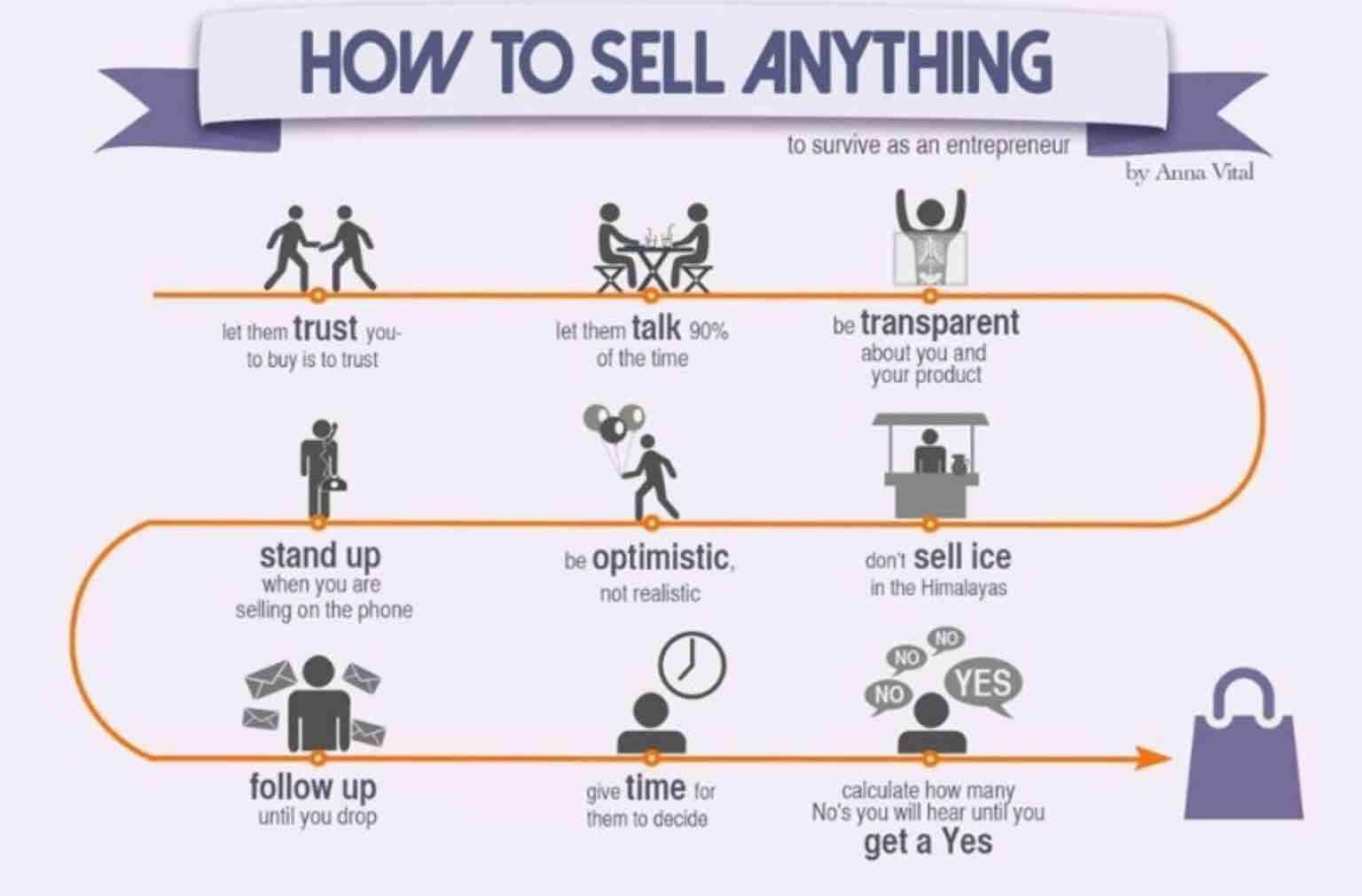
Image courtesy of Anna Vital.
P.S
Coming soon Changing Your Sales Mindset- 7 Day Challenge