by Mike Brunel | Jul 12, 2017 | Sales
Harnessing the power of Testimonials
At least once a month at my place, on a Friday night, my family will have to make a major decision: ‘What takeaways are we going to have tonight’?
A third world problem right?
An old ritual from days gone by.
I am sure the Friday takeaway ritual came from my own family when all of us would pile down to the fish and chip shop, and get to choose between a sausage, hot dog and fish with a few chips thrown in, then wait in the car eating them, while Mum and Dad nipped off to the pub for a quick drink.
New experience
In our family now we might want to try something different and go out to a café or restaurant.
When that happens the question always comes up ‘what’s new in town’ or ‘, what was the name of that place that my mate Dave was talking about last week’?
Following this, we’ll call or text Dave to ask him what the restaurant was called because we know he’s pretty reliable when it comes to good food!
Why we need assurance – Power of Testimonials
What people say about you is 10 times more powerful and believable than what you say about yourself.
Deep down you know that Dave would not recommend that restaurant unless he enjoyed it. He is telling you from his own experience and that is very, very powerful.
You have your own interests at heart
It’s a lot harder to sell something to someone because naturally you have your own interests at heart.
What your clients may want is another way to make a decision. This is why an opinion from a third-party could be very influential, just like Dave influenced my decision on a restaurant.
The point is that getting someone to recommend you helps a lot. If it does not work out you can always blame Dave- no just kidding!
Create and use testimonials
There are a few tips I’ve come across in my time about receiving great testimonials, but one stands out as pretty crucial; be specific.
The more specific you are about the outcome you want, the more targeted your endorsement will be.
Let me give you an example. If you ask a client for a testimonial ask this way.
‘Hi John, can you describe the one or two most important benefits you’ve gotten the most from working with us… please explain specifically what you’ve gained from the experience:
The second one I often ask is: ‘Describe in Detail What Part of Your Experience with us made you the happiest?’
This question taps into the emotional side of the experience, and that is where you will understand what drove your clients to use you in the first place.
In summary, be specific, and don’t forget to ask for their thoughts around the emotional experience..
Have a great week, see you soon.
Mike.
Ps. Keep an eye out for our brand new CHANGING YOUR SALES MINDSET – 7 Day Challenge coming soon.
by Mike Brunel | Feb 2, 2017 | Sales, Strategy
80%……….Of all sales are made after the fifth call
48%……….Of all sales people call once and quit
25%……….Call twice and quit
10%……….Keep on calling
These statistics is pretty close to the mark in all forms of selling be it a service or product sell.
I think that we all know…
SALES DON’T JUST HAPPEN.
I have created a diagram to illustrate the real time that your buyer is actually available to sell to.
Just email me at mikebrunel.com for a copy.
Why do many some sales people thrive when others do not, here are some ongoing practices I observe every day.
1. Always add to your pipeline.
Not continuously adding to your pipeline is often a mistake that salespeople make once they have established a strong ongoing sales funnel. If you continue to add to your sales pipeline then if that long established client decides that this month they will not buy, then it does not matter because you have more potential opportunities in your pipeline.
If you are always taking the position of helping and assisting your client then your pipeline will increase. If you are only filling up your pipeline when you are desperate then many clients will sense that and you will come across as desperate.
2. Never assume they need you.
I have noticed that many salespeople leave a message with a client or a voicemail and they think it ends there. They think that they have done what they had to do and then move on. Depending on the relationship you have with that client they may or may not call you back. If you do want to do business with them then you have to plan that call and decide the ongoing strategy to get the person to respond. Create a proactive message for them to call you back.
3. Sales potty training.
For those that may have had young children there was a time when you had to train them to go to the toilet. In my experience (a while ago) I always used to say “Pee or get off the pot”. In other words, make a decision.
There will be times when you have to make a decision to get off the pot. Some clients need to be let go. You need to figure out if a prospect is serious about working with you or not. A good pipeline is full of qualified prospects and not “tyre kickers”
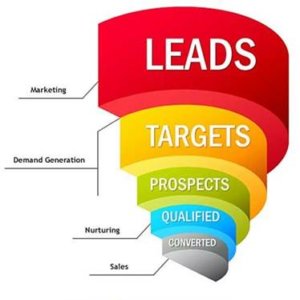
All pipeline activities have to support your key messages and understanding actually who your client is and where they play is vital to successful sales.
Good selling
Mike

by Mike Brunel | Jan 26, 2017 | Sales, Strategy
Part of the reason people panic when they think about sales is that selling seems like a mysterious process.
We might just be able solve that mystery.
It’s our belief that selling is like any other journey: the territory you are covering may be new to you, but it has been travelled before, and there are certain steps you can take to clear the way. Each step you take along the way matters.
Let’s look more closely at the selling journey.
Building Up by Planning
Selling a product or service is, in many ways, like a building project.
I have been involved in two major renovations for both a home and a commercial building.
Here’s how the process unfolds:
- You speak with an architect who presents you with some plans, drawings, or visual examples of what your home or building might look like.
- Once you approve your plan, you seek a builder to do the construction.
- If you want to approach the build with confidence, you’ll also want to be involved in the builder’s plans and timelines. Using excellent project management tools is key.
- Still, even the best-laid plans sometimes change. You might go back and forth and change a few parts of the
- Even when you get started, you need to keep in mind the need to be flexible, adjust to shifting timelines, accommodate last-minute decisions, and possibly suffer some setbacks.
- You need to be nimble, but it’s hard, because there is a lot at stake, financially and emotionally.
- Soon enough, though you start to visualise the final product and then watch your home or building take shape. Finally, you see your completed project in front of your eyes. All of that planning has paid off.
Following a plan and actually building that home requires discipline and principles.
It’s the same with sales, which unfolds in similar stages.
With both types of projects, it is important to begin with the right mindset, so why don’t we do that when it comes to constructing a sale? Why don’t we plan the process that will let us get a result we want?
Most business owners jump in too quickly, assuming that their product is so magnificent that people should just buy it. Or, they don’t bother to plan.

Usually salespeople do not follow any particular steps or process on the way to the sale of that product. If you look at sales the way you look at building your home, though, you will see that there are certain processes you have to follow to get a good result.
It does not have to be a complicated process, but you do need a plan.
Knowing a few simple steps in the journey to your sales is all that is required. In my book Selling is not optional we have a 7 step process to help you understand the selling journey better.
If you don’t know where you are going, how will you know when you get there?
Good selling
Mike
Here is an audio introduction on the preparing for the journey when it comes to selling.

by Mike Brunel | Jan 20, 2017 | Sales, Strategy
Things you could learn from Donald trump that you could use to make more sales.
Every day I ask one simple question of my clients? What motivates your client to buy off you and not the other guy?
In a recent editorial from the US editor of the Week Magazine* he made some underlining observations about the motivations that drove Donald Trump to run for the presidency. Take some time to read his thoughts.
You certainly do not have to share his motivation but it’s often at the core of every decision that your clients make about your product or service which I will talk to later.
#Article Reprint THE WEEK, July 2016
Editor’s Letter
Throughout life, Donald Trump has been disrespected. The son of a real estate developer who build cheap rental housing in Brooklyn and Queens, Trump was sneered at when he crossed the east river to make his name in Manhattan by building glitzy hotels and condominiums. Even after he had success, sophisticates dismissed him as a “short- fingered vulgarian” and headline hungry tabloid whore, and the derisive laughter rang in his ears when Trump Airlines and his garish Atlantic City casinos went bust.
Nobody took him seriously when he repeatedly mused out loud over the past 30 years that the country was poorly led by weak mean and that he had toughness and negotiating skills were just what America needed in a president. In a compelling profile in buzzfeed.com this week political writer McKay Coppins argues that it was to the stain of the elites, intellectuals, and insiders that drove Trump to make this improbable run. President Obama may have delivered the pivotal insult at the White House correspondence dinner in 2011 when he got revenge for Trumps “birther” campaign by ridiculing him as a conspiracy theorist, and reality TV buffoon as 2,500 insiders roared with laughter. “Trump just sat there” Coppins says “stone-faced stunned simmering- Carrie at the prom covered in pigs blood”
It’s sometimes said that Trump has no core political views no grasp of policy no position that he won’t reverse 15 minutes later. He’s changed party registration at least seven times. But as both Coppins and Trumps biographer Michael D’Antonio have concluded, there is a central driving force in Trumps life and his presidential campaign: shame. He intuitively grasps and channels the rage and resentment that millions of Americans feel about being shut out and left behind, and offering them his hunger for revenge. This is the platform on which he is running. You think you’re better than us?
We’ll show you
William Falk
Editor in Chief.

When I read this article I was compelled to write that the very driver for Donald Trump might just manifest in your clients in some form.
He knows what keeps his voters up at night, he know who they are frustrated with, and he is pretty clear who they despise, hate even. That was why he won.
When I work with clients I get them to fill out a through questionnaire on some of the key motivations why their clients buy their product.
It is quite revealing and, often for the first time, aligns them to what the real motivations of their clients are.
Most of us have suffered as that BS salesperson who tells us every time with their superior product knowledge that his or her product is right for me, ignoring the very principle of selling in this age, of “if you want to sell me more- know me more”.
In other words, instead of knowing if you want to sell me more of your stuff know me more- not about what the other guys is selling (your competition) but me- the client, the guy that is sitting in front of you.
In my book Selling is not optional there is a specific exercise I ask you to do that unlocks the power of asking good questions to find out your client’s motivations.
Good selling.
Mike
*This publication covers the Week’s news and editorial commentary from global media to provide readers with multiple political viewpoints
# reference to article from NO BS Newsletter

by Mike Brunel | Nov 3, 2016 | Sales
Clearly, mindset can make all the difference in problem solving.
Stanford University psychologist Carol Dweck, a leading expert in motivation and psychology, and author of the book Mindset: The New Psychology of Success, discovered that everyone has one of two mindsets—fixed or growth.
Her work confirms what I have seen in sales over the years: people do tend to have either a fixed mindset, or a growth mindset. Why is this an interesting finding? Which mindset do you think leads to more success in sales?
Is Your Sales Mindset Set in Stone?
Consider the fixed, or closed, mindset as it applies to sales. If you have a fixed mindset, you might say certain things to yourself that freeze your thinking in one position.
Some of these things I have heard repeatedly throughout my sales career. Do you ever hear yourself saying these things to yourself?
- Sales is hard.
- Salespeople are born.
- I can’t sell!
- I tried sales once and it never worked.
- I will look stupid if a client says no.
- I have to win or lose.
- Will I succeed? Probably not.
- I hate sales, and will never be any good at it.
Chances are you have thought more than one of these things in the course of your career. With a fixed mindset, you see things only in black and white. In your mind, you hear words like “win or lose,” “right or wrong.” You assume things have always been done one way and nothing will ever change. This mindset, while understandable, may not work well for you if you sell a product or service.
Growing your Business
If you have a growth mindset, on the other hand, you may find yourself thinking differently. More and more often, you will catch yourself saying things like:
- Sales is easy.
- Salespeople are made, not born.
- I can’t sell . . . until the next opportunity.
- I tried sales once and while it was challenging, what did I learn?
- I need to make some more mistakes to learn.
- I win, lose, or get the opportunity to go back again.
- If I succeed—great! If I fail, what did I learn?
What if you could adopt this way of thinking, what Carol Dweck calls the “growth mindset” or “potential mindset”? It might help you push through limiting attitudes toward many things in your life or business. It might dramatically change your life. If you can catch yourself in your fixed mindset, you will start to get results much quicker. I promise.
It may be daunting to think about changing the very way you think about things. How can you do that?
- Look for opportunities to grow every day. When you begin to take up a growth mindset, you will find that if you are not learning new things you are actually failing. Challenging yourself to learn just one or two new things a day will build a growth mindset.
- Deal with failure and setbacks. Planning is an important part of growing. However, we do not always achieve all of our goals. Instead of beating ourselves up, look in a different direction and start again.
- Grow by doing. Ask yourself, what can I do differently? Apply a different approach to a problem and see what happens.
Download our free test- How’s my Mindset around Sales?
You will discover instantly how you rate in the sales and influencing department in your business.
Good Selling.
Here is an audio extract from my book